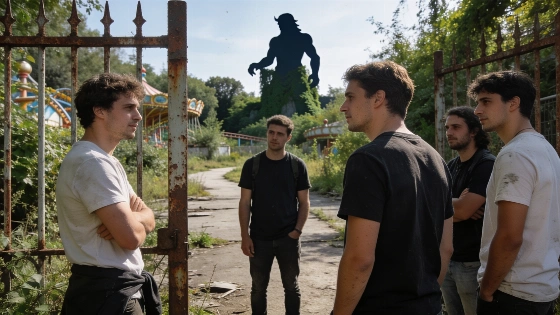
Talks are underway to transform the long-abandoned Mirapolis park outside Paris into a Dragon Ball-themed attraction. No deal has been signed, but the project could bring new life to the site that once aimed to rival Disneyland. Key questions remain about investment, local impact, and the fate of current residents.
French officials and Qiddiya Investment Company have been in negotiations since April over a plan to revive the former Mirapolis amusement park, located about 30 kilometers from Paris, as a Dragon Ball-themed destination. While discussions are advanced, no agreement has been finalized, and there is no set timeline for opening. The project, if realized, could see an investment exceeding one billion euros, according to Politico, but neither a confirmed budget nor construction schedule has been made public.
The Mirapolis site, once envisioned as a French answer to Disneyland, has stood empty for 35 years after closing in 1991 due to disappointing visitor numbers. Its most memorable feature, a giant statue of Gargantua, could soon be replaced by attractions inspired by the world of Dragon Ball. The Saudi-backed Qiddiya group, which is already developing a massive Dragon Ball park in Saudi Arabia, is seen as the driving force behind the French proposal. Their Saudi project, announced in 2024, will feature over 500,000 square meters, seven themed zones, and a 70-meter Shenron statue housing a roller coaster. However, the French version is expected to be smaller in scale, with details on attractions, layout, and operators still unclear.
Negotiations Without Certainty
Official documents confirm that France and Qiddiya have been exploring a major leisure project since at least May 2025, when a memorandum was signed as part of the Choose France initiative. That agreement referenced a large-scale tourism and entertainment venture but did not specify Mirapolis, Dragon Ball, or any concrete figures. Recent reports now link those early talks to the Val-d’Oise site. Multiple meetings have involved the Elysée, regional authorities, local municipalities, and economic agencies, but none have publicly confirmed the project's specifics or signed off on a final deal.
Challenges for the Community
Reviving Mirapolis would require resolving significant logistical and social issues. The site suffers from poor transport links, a factor blamed for its original commercial failure. Upgrades to road access, RER A train connections, and electricity supply are under discussion, as is the acquisition of land. Another major challenge is the presence of 300 to 400 people, including around 100 households, who currently live on the former parking lots—some for nearly a decade. No public plan for their relocation has been announced, raising concerns among local residents and officials.
Uncertain Economic Impact
While the potential for job creation and tourism is significant—Disneyland Paris, for example, employs up to 20,000 people in peak season—there are no official estimates for employment, visitor numbers, or economic activity linked to the Mirapolis project. The lack of a signed agreement, clear investment figures, or a construction calendar means the future of the site remains uncertain. Local hopes for a new era coexist with doubts about infrastructure, municipal involvement, and the fate of families living on the grounds.
Context and Broader Trends
The Mirapolis story reflects a wider trend of reimagining abandoned leisure sites across Europe. In Switzerland, for instance, access rules and pricing for public pools have changed in response to shifting visitor patterns, as reported in coverage of Porrentruy's outdoor pool reopening. The fate of Mirapolis will depend on whether French authorities and Qiddiya can overcome the site's complex legacy and deliver a project that balances investment, local needs, and the realities of large-scale tourism development.