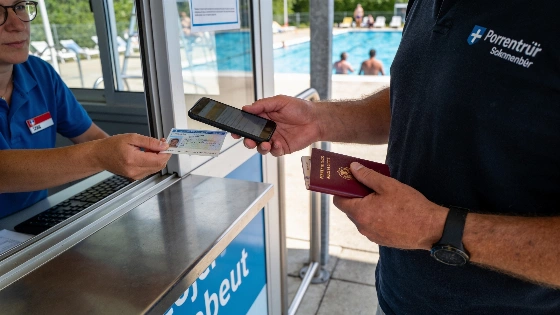
Foreigners can once again access the outdoor pool in Porrentruy, Switzerland, after last year’s ban. However, those without Swiss residency or work permits now pay double the local rate and must buy tickets online. The new system aims to balance access and order after a turbulent 2025 season.
Foreign visitors are once again allowed at the outdoor pool in Porrentruy, near the French border, after a controversial ban last summer. The local authorities have dropped the 2025 restriction that excluded non-residents, but the new rules come with a price: adults without Swiss ID, residency, or work permits now pay 15 francs per entry—twice the rate for locals. Tickets must be purchased online and are only valid when presented with identification at the entrance.
The 2025 ban, which ran from July 4 to August 31, was imposed after a surge in attendance and repeated violations of pool rules. Only Swiss citizens and holders of valid Swiss residence or work permits were admitted during that period. According to the municipality and the inter-municipal syndicate managing the facility, the decision followed a series of incidents, including over twenty expulsions for inappropriate behavior or rule-breaking. The restriction was lifted for the final two weeks of the season, as confirmed by Mayor Philippe Eggertswyler on September 2, 2025.
Controversy surrounded the ban, especially after reports suggested that up to 95% of those affected were French nationals. However, the figure referred to the proportion of excluded visitors, not the overall pool attendance. The debate over access criteria continued into 2026, with the Federal Commission against Racism arguing that the previous policy conflicted with Switzerland’s constitutional ban on discrimination. Cantonal authorities maintained that short-term, urgent measures could be justified for safety reasons, but warned against making such restrictions permanent.
New Pricing Structure
For the 2026 season, the pool has introduced a dual pricing system. The official rates set the general adult entry at 15 francs, while those with Swiss ID, residency, or work permits pay just 7.50 francs. Children from age six, students, and pensioners also face higher prices if they lack Swiss documentation. Only single-entry tickets are available to foreigners; multi-entry passes and season tickets remain exclusive to those with recognized Swiss ties. Entry is only possible with an online ticket and valid ID at the gate.
Compared to municipal pools in cities like Madrid, where prices are based on age and social discounts, Porrentruy’s system ties the fee directly to legal status. This approach has sparked debate over fairness and the balance between public order and equal access.
Ongoing Debate Over Access
In March 2026, the Porrentruy council proposed changes to its police regulations, allowing for temporary or permanent measures to control pool access based on capacity or security needs. The draft also outlined priority categories, such as residents and permit holders. The cantonal police clarified that their review focused on operational aspects, not legal validity. The 2026 model removes the outright ban but maintains economic and administrative hurdles for those without Swiss documentation.
For French visitors without Swiss residency or employment, the process is clear: buy a general admission ticket online, bring a valid ID, and pay the higher fee. Season passes and multi-entry cards are off-limits. The pool operates from 9:00 to 20:30 until August 16, then shortens hours until September 6, with weather potentially affecting opening times. Official schedules should be checked before visiting, as daily operations depend on conditions.
There is currently no blanket ban on French nationals. Anyone with a Swiss residence or work permit can access the reduced rate, regardless of nationality. Those without such documents must use the general ticket option and comply with the identification requirement.
The debate over access and pricing at public facilities is not unique to Switzerland. In France, disputes over rental rules and tenant rights have also led to legal battles, as seen when a landlord’s attempt to evict tenants over a locksmith bill was overturned by the courts, highlighting the complexities of cross-border regulations and fairness. For more on such legal disputes, see this recent case involving tenant rights in France.