Researchers found more active meprin-β in the brains and cerebrospinal fluid of people with Alzheimer's disease. The enzyme may help explain beta-amyloid processing and could become a candidate disease indicator.
Active meprin-β is elevated in the brains and cerebrospinal fluid of people with Alzheimer's disease, according to a study led by Javier Sáez Valero at the Instituto de Neurociencias of the Universidad Miguel Hernández de Elche and the Consejo Superior de Investigaciones Científicas. Meprin-β can act as a β-secretase and may help process the amyloid precursor protein. The increase was clearest in advanced stages of the disease, not at its beginning.
The study, published in Alzheimer's Research & Therapy, separates two details that are often combined when researchers measure protein levels. The investigators examined immature meprin-β, which is inactive, and the mature form, which is active. In samples from the frontal cortex, the active form increased during the later Braak stages. Messenger RNA from the MEP1B gene rose during intermediate and advanced stages.
The study was reported as work by Sergio Escamilla and colleagues from the Altered Molecular Mechanism in Alzheimer’s Disease and Dementia laboratory at the Institute for Neurosciences of UMH-CSIC.
The main finding is not simply that there was more of the protein. It was that the active form increased.
That puts meprin-β alongside BACE1 in research into how beta-amyloid is made. Alzheimer's disease involves the buildup of beta-amyloid in the brain. The peptide appears when enzymes process the amyloid precursor protein, or APP. The researchers say their findings point to meprin-β as another enzyme that may take part in that process.
The cerebrospinal fluid results may also have clinical value. The team found more active meprin-β in samples from people with Alzheimer's disease. Cerebrospinal fluid is collected through a lumbar puncture, giving researchers material to study molecules linked to processes in the nervous system. The team therefore presents the protein as a possible indicator for further study, not as a diagnostic tool. MedicalXpress also describes it as a candidate marker of the enzyme's relationship with beta-amyloid, not as a validated clinical test.
Earlier work discussed by Alzheimer Forschung Initiative indicates that meprin-β can be selectively inhibited. A new inhibitor was developed by Christoph Becker-Pauly’s team in Kiel with support from the foundation, making the enzyme a potential therapeutic target if future studies show that blocking it reduces beta-amyloid formation.
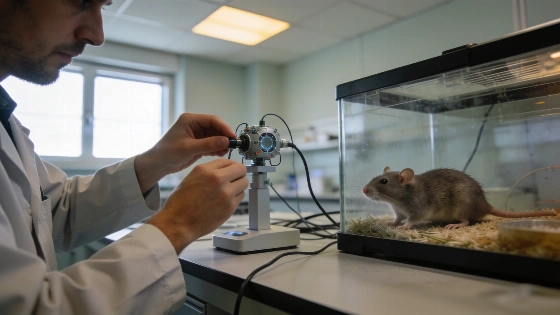
Experiments in animals and human cells added support to the link with beta-amyloid. In transgenic rats that develop pathology associated with beta-amyloid buildup, the active form of meprin-β also increased in cerebrospinal fluid. The team then used human neurons made from induced pluripotent stem cells. When the researchers exposed those neurons to the beta-amyloid peptide Aβ42, meprin-β increased significantly.
This sequence links the change found in patient samples to one of the main features of Alzheimer's pathology. It does not prove that meprin-β causes the disease. It also does not show that measuring the protein can diagnose patients. The findings point to a biological relationship that needs more testing.
The project involved researchers from the Centro Médico Universitario de Mainz in Germany, the Universidad de Barcelona, and the Universidad de Gotemburgo in Sweden. Sáez Valero's laboratory is also part of CIBERNED and ISABIAL. Funding came from the Fondo de Investigaciones Sanitarias, the European Regional Development Fund, the Instituto de Salud Carlos III, the Generalitat Valenciana, the Ministerio de Ciencia Innovación y Universidades, the Agencia Estatal de Investigación, and the Severo Ochoa programme.
The study's main contribution is its precision. It identifies the active form of meprin-β in brain tissue and cerebrospinal fluid. It also reproduces the increase after human neurons were exposed to Aβ42. That makes the enzyme a serious subject for Alzheimer's research, but it is not enough to create a test or treatment. For now, meprin-β may help explain part of the beta-amyloid pathway. Any clinical use will require targeted studies first.