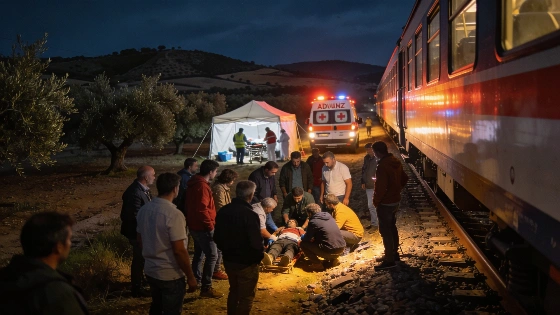
Adamuz Mayor Accuses Andalusian Leader of Politicizing Railway Tragedy. The head of Adamuz has sharply criticized the president of Andalusia for referencing the tragedy during the debate. According to him, assistance to those affected by the accident arrived late, and coordination between services was only established two hours later.
A heated dispute has erupted in Adamuz (Córdoba province) over the authorities' response to the tragic train collision that claimed 46 lives in January. The town's mayor, Rafael Ángel Moreno Reyes, publicly accused the president of the Andalusian Junta and Partido Popular candidate, Juan Manuel Moreno, of using the disaster for political gain during election debates.
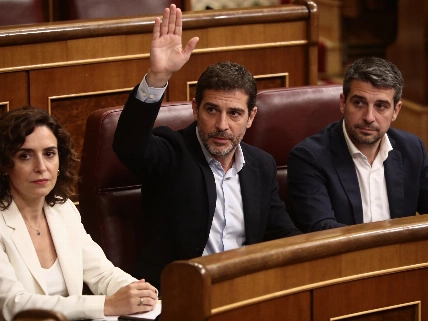
According to the head of the municipality, the discussion of the accident during the debate with PSOE candidate María Jesús Montero became an unexpected and painful moment. Moreno Reyes emphasized that he had previously chosen not to speak out publicly so as not to interfere with the investigation, but has now decided to share details of that night which, in his opinion, have remained outside the public eye.
Delay in emergency assistance
The mayor of Adamuz stated that after the train collision, most victims were left without organized medical aid for a long time. By his estimation, by 9:30 p.m.—a significant time after the accident—the injured were not yet receiving appropriate attention from professional services. For almost two hours, assistance was mainly provided by local residents without special training.
He noted that only an hour after the incident did the first eight ambulances arrive, and full command of emergency services and deployment of a field hospital did not begin until after 10:00 p.m. According to Moreno Reyes, during this period there was a lack of clear leadership, and local residents were forced to act on their own.
The role of residents and criticism of coordination
The city leader emphasized that it was the residents of Adamuz who bore the brunt of providing first aid and support to the victims, both at the scene of the accident and in the municipal pavilion where the passengers were taken. According to him, until 23:30, not a single official medical post was set up at this location, and assistance was provided only by local nurses, doctors, and home care staff.
Moreno Reyes expressed confidence that, without the selflessness of the residents, the consequences could have been even more severe. He also noted that if not for the initiative of local citizens, the issue of personal responsibility for the delay in assistance would have been much more acute.
Political conflict and reaction
The mayor of Adamuz strongly condemned attempts to use the tragedy for political purposes, stressing that those now trying to benefit from the situation are well aware of where precisely failures occurred that night. He stated he would not allow the disaster to be turned into a tool for election campaigning and reminded that city residents arrived at the scene before the official services.
In the context of discussions about the role of local initiatives and the authorities' response to emergencies, it is worth noting that questions about the effectiveness of emergency services are regularly raised in Spain. For example, the recent launch of the new free religious TV channel EWTN, which became available in Madrid and Barcelona, was widely discussed in the country — more details about this can be found in the article about the launch of EWTN on TDT.