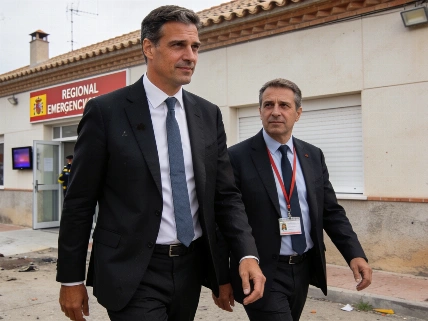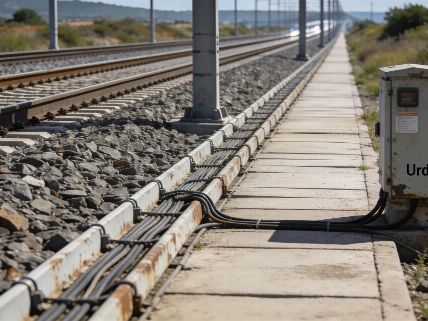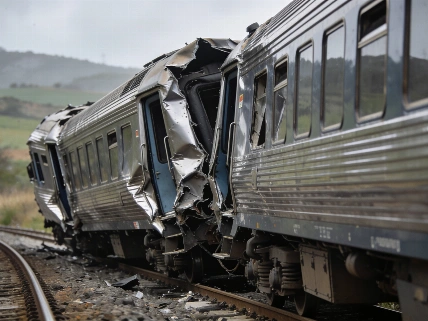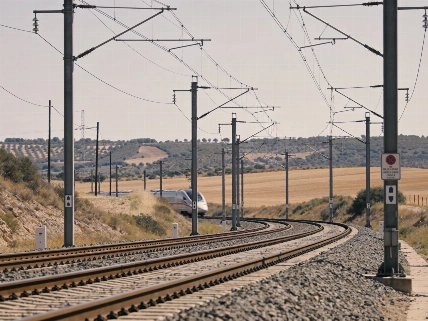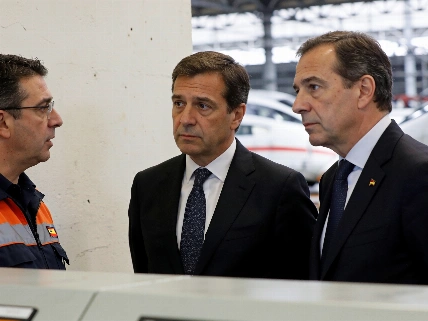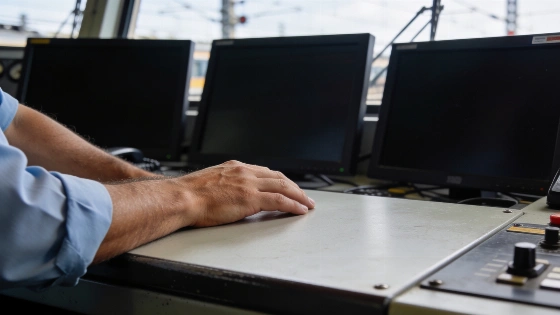
The Government placed primary responsibility for the Urda rail crash on the Centre for Regulation and Control (CRC) in Atocha. Transport Minister Óscar Puente called an operator’s instruction for the stricken AVE to resume normal speed while trains were stopped ahead inexplicable. The collision occurred shortly before 9 a.m. on 28 October 2026, when a Renfe AVE struck a stationary Iryo train on the Madrid-Seville high-speed line near Urda, Toledo. Workers say staff shortages were already putting the control centre under pressure.
They had raised the issue with Adif three times. At a meeting on 15 October, staff representatives warned of a personnel shortage, according to a draft of the minutes seen by El Confidencial. They also said numerous shifts at the H24 emergency centre routinely went uncovered.
The dispute goes beyond a single shift. Workers at Atocha asked Adif to provide cover across all shifts so colleagues could take breaks away from their screens. They said long hours and missed rest periods had become common. The staffing schedule sets out how many operators work each shift; staff asked the company to reopen talks on its update.
They said the last attempt to negotiate that schedule took place in June 2025. Adif had told them it would send the document the following week. A crash audio report has also covered the account of control-room instructions.
Control-room professionals described a structural problem affecting Atocha and other centres across Spain. In a letter sent in May, the Sindicato de Circulación Ferroviaria (SCF) warned Adif that changes to the operator’s legal framework had left staff fatigued. The union said the maximum shift for controllers had risen to eight hours, two hours longer than under the previous agreement.
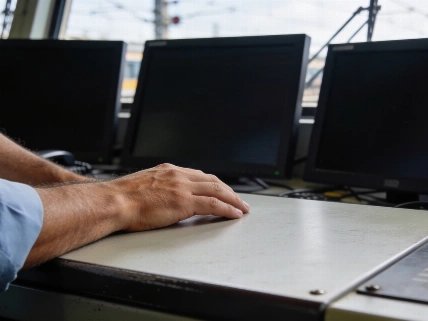
The workload can be heavy. During the Urda accident, one operator on the Madrid-Atocha line was supervising nearly 20 trains; ten was described as the recommended maximum. Workers also pointed to a shrinking workforce that leaves rest periods uncovered, a rise in trains following the sector’s liberalisation and the retirement of experienced staff.
The Guardia Civil’s criminal inquiry has focused on the Atocha control centre. Investigators are examining who authorized the AVE to continue, what information appeared on the operator’s screens and why warnings did not prevent the collision. They collected circulation data at the centre and requested Adif records identifying staff on duty. The Guardia Civil also questioned the operator responsible for regulating traffic on the line, Europa Press reported. By 29 October, investigators had set out eight priority lines of inquiry. Reported questions include the control-room authorization and the warnings available to staff.
The technical investigation is being conducted separately by AITAT, Spain’s independent railway, maritime and civil-aviation accident investigation authority. On 28 October, AITAT opened a formal inquiry and classified the collision as a grave accident. The authority said the investigation was at an initial stage, with possible causes and contributing factors still under examination. Its inquiry is separate from the Guardia Civil’s criminal investigation.
Reporting on the preliminary technical inquiry has also examined the LZB train-protection system. The system reportedly showed a red warning that the Iryo train ahead occupied the track before the AVE was authorized to move again. Antena 3 reported a provisional collision-speed estimate of 160 to 200 km/h. Investigators have yet to establish why the protection did not stop the AVE, or whether protections were unavailable or bypassed. All hypotheses remain open.
Reports on 29 and 30 October put the death toll at 69, with more than 180 people injured. Around 50 injured people were still hospitalized, several in serious condition, according to Heraldo de Aragón. These figures were casualty updates in the immediate aftermath of the collision.
Adif declined to comment on the allegations. The SCF called for Puente’s immediate resignation and accused Adif’s management of failing to invest and manage effectively. The union said it had warned successive company leadership teams about staffing levels for years.
Adif’s draft collective agreement, sent to unions in late September, said the company would seek the maximum ordinary replacement rate allowed under each year’s state budgets. It added that 2,400 additional posts approved after the Adamuz accident would help meet essential needs and support safety. According to the source account, unions had submitted objections and were awaiting a new draft.
A worker at the CRC said staff were meant to average 15 minutes of rest each hour, but rarely managed it. The worker also described the Madrid-Seville line as especially stressful because of overnight maintenance work.