Alicante Elite VPP Case: Former Official Cannot Recall Her Role. The investigation into the allocation of elite VPPs in Alicante continues. The former head of urbanism has claimed memory lapses. The court denied the Generalitat's request to be a plaintiff.
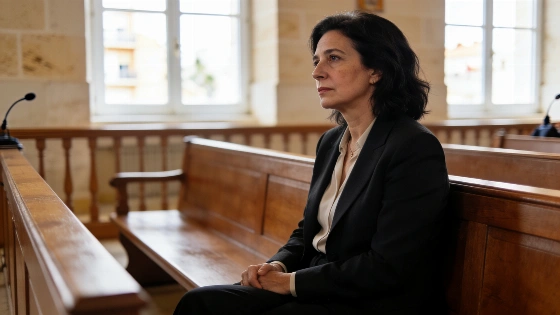
At a hearing in Alicante regarding the allocation of elite apartments with protected status (VPP) in the Les Naus residential complex, former head of the Urbanism Department, Rocío Gómez, stated that she did not remember whether she participated in the allocation process. She confirmed only that she and her husband joined the cooperative in 2021, but further details, including possible involvement of relatives, were beyond her recollection. Gómez also noted that she had not received information from the municipality and could not recall whether changes to the contract terms were discussed with the developer.
During the hearing, the judge denied the Generalitat Valenciana the right to act as a private prosecutor, citing the lack of direct harm to the autonomous community and a possible conflict of interest. In the court's opinion, the regional government's participation could overlap with the functions of the prosecutor’s office and cast doubt on the process's objectivity, given that some individuals involved are linked to the authorities.
Among those questioned was municipal architect Francisco Nieto. He reported that he learned about the Les Naus project before taking office, and in 2024 participated in technical meetings regarding the site. Nieto claimed that he did not use his official position to purchase property and did not act as the official technical supervisor. However, another technical expert, Antonio Faura, stated that it was Nieto who proposed changes to the contract and actively took part in the discussions, without disclosing his interest in the cooperative.
Technical staff member Paloma Romero stated that the initial drafts of the reports included the names of participants, which later disappeared from the final documents. She also noted that the cooperative of the developer Francisco Ordinaña submitted its application the day after the competition conditions were published, along with four other companies. According to Romero, if the decision had been up to her, she would not have allowed Nieto to participate in a project where he had a personal interest.
Another witness, Pablo Torregrosa, reported that Ordinaña repeatedly demanded compensation for the high cost of the land or the allocation of another site. At the same time, Torregrosa emphasized that Nieto did not disclose his connection to the cooperative.
The trial concerns possible violations in the allocation of 140 apartments with garages and storage rooms in an upscale district of Alicante. Among the recipients of the housing were senior municipal and regional officials, as well as individuals who did not meet the program's economic criteria. This is the first program of its kind (VPP) in the city in the past twenty years.
In the context of debates over the transparency of municipal decisions, it is worth noting that the authorities in Valencia recently changed the procedure for appointing the head of Palau de les Arts, abandoning the competitive selection process and extending the contract of the sitting director — more details on this decision are available in the article about the extension of the opera house director’s mandate.
For reference: VPP (viviendas de protección pública) refers to housing with a fixed price cap, intended for certain categories of citizens. In Spain, such programs are regulated at the autonomous community level and often come with strict selection criteria. In recent years, transparency issues in the allocation of VPP have become a matter of public and legal scrutiny, especially in major cities and regions with high demand for affordable housing.