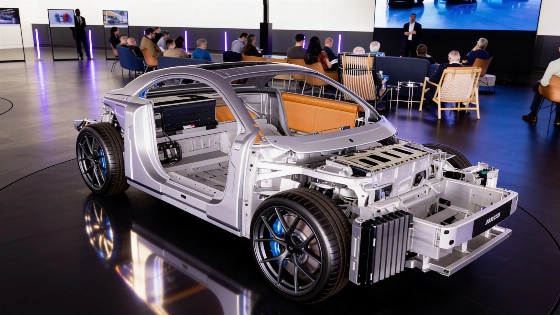
Alpine has introduced its Alpine Performance Platform, a modular 800V electric architecture designed to preserve the brand’s signature driving dynamics. The new platform supports both two-seater and 2+2 sports models, aiming to redefine electric performance.
Alpine has taken a decisive step into the electric era with the introduction of its Alpine Performance Platform (APP), a purpose-built architecture set to underpin the brand’s next generation of sports cars. The French marque’s ambition is clear: to prove that electrification can coexist with the agility and driving pleasure that have long defined Alpine’s DNA.
Unlike many electric platforms that prioritize versatility over character, the APP is engineered with a sharp focus on performance. The platform’s flexibility allows for both two-seater and 2+2 configurations, but it’s the upcoming two-seat sports car—envisioned as the spiritual successor to the Alpine A110—that best showcases Alpine’s intent. Instead of placing the battery entirely beneath the floor, Alpine splits the pack, allocating 25% of its capacity up front and 75% at the rear. This layout enables a notably low driving position, a roofline comparable to the current A110, and a weight distribution optimized for nimble handling.
Central to the APP is its 800-volt electrical architecture, which supports ultra-fast charging—replenishing the battery from 10% to 80% in under 15 minutes. The platform also adopts a Cell-to-Pack construction, integrating battery cells directly into the chassis without intermediate modules. This approach increases structural rigidity and reduces weight, both critical for delivering the precise, responsive driving experience Alpine is known for.
Advanced Powertrain and Agility
The propulsion system developed for the APP is equally ambitious. Alpine employs permanent magnet synchronous motors within a compact “6-in-1” system, featuring silicon carbide inverters, oil cooling, and a maximum rotational speed of 21,500 rpm. The most performance-oriented version uses two rear-mounted motors, each independently controlling torque to its wheel via Alpine’s proprietary Active Torque Vectoring system. This technology enables near-instantaneous torque distribution, reducing understeer and sharpening cornering response far beyond what conventional differentials can achieve.
Depending on the model, the platform can accommodate rear-wheel drive, all-wheel drive, and even four-wheel steering systems, highlighting its modularity and adaptability to different performance needs. This flexibility positions Alpine to compete in a rapidly evolving segment, where brands are racing to combine zero-emission credentials with authentic driving engagement.
Virtual Development and Efficiency
Alpine has also invested in advanced virtual development tools to accelerate and refine its engineering process. The brand’s dynamic simulator, known as DIM250, is operated by a dedicated team of six engineers. Equipped with a six-degree-of-freedom motion platform, a cockpit modeled after the A110, a nine-meter panoramic screen, 120 Hz projection, and sophisticated haptic feedback, the simulator allows for highly realistic testing of suspension, steering, braking, tires, and electronic controls—long before any physical prototype is built.
According to Alpine, intensive use of the simulator since 2025 has enabled engineers to cover over 45,000 virtual kilometers across various projects. This has significantly reduced the number of physical prototypes required and shortened development timelines, while also ensuring that real-world testing begins with more advanced setups and clearer specifications for suppliers and components.
Alpine’s approach reflects a broader trend among performance brands embracing electrification without sacrificing their core values. As noted in the recent launch of the DS N7, which also blends advanced electric technology with a focus on driving experience, the competition in this space is intensifying. For Alpine, the APP represents not just a technical leap, but a statement of intent: electric sports cars can—and should—deliver the same thrill as their combustion predecessors. The DS N7’s debut highlights how French manufacturers are pushing the boundaries of electric performance, signaling a new era for enthusiasts and the industry alike.
Looking ahead, Alpine’s commitment to lightweight engineering, modularity, and immersive development tools positions the brand to remain relevant as the automotive landscape shifts. The true test will come when these new models hit the road, but the groundwork laid by the APP suggests Alpine is determined to shape the future of electric driving on its own terms.