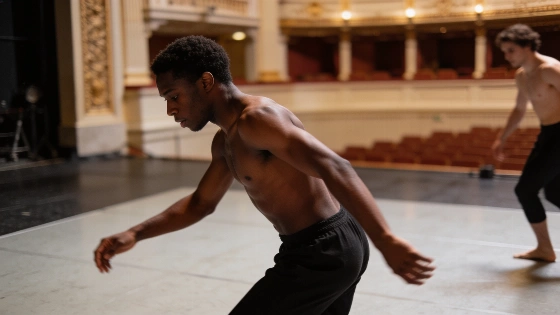
The Alvin Ailey American Dance Theater returns to Spain after 24 years. Six performances at Madrid's Teatro Real will bring together landmark works, the 1960 classic Revelations and newer choreography under artistic director Alicia Graf Mack.
After a 24-year absence from Spain, the Alvin Ailey American Dance Theater will give six performances at Madrid's Teatro Real from 14 to 18 October 2026. Across two programmes, the company will present ten choreographies, pairing landmark works with newer pieces under artistic director Alicia Graf Mack.
The first programme is scheduled for 14 October 2026 at 19:30, followed by performances on 16 October at 19:30 and 17 October at 19:00. The second programme is set for 15 October at 19:30, 17 October at 12:30 and 18 October at 18:00. Madrid will host two sessions on 17 October, at 12:30 and 19:00.
RTVE confirms the dates, the two-part format and the company's current artistic leadership. The visit follows a 24-year absence from Spain.
Alvin Ailey created the company in 1958 during the United States civil rights movement. Its work placed modern dance rooted in African American traditions at the centre of a form intended to cross boundaries of race and religion, as well as national borders. That original purpose still shapes the company's work in Madrid.
The first programme looks back to Ailey's original repertoire. It includes excerpts from Night Creature and Cry, as well as A Song for You, alongside Revelations. Doce Notas and the Teatro Real reported the performance dates and programme details.
The later programme turns to newer work. Judith Jamison, Medhi Walerski, Lar Lubovitch and Jamar Roberts are represented in the selection. The two programmes place Ailey's best-known work alongside choreography from later generations.
Revelations sits at the centre of both programmes. Created in 1960, it combines classical ballet and modern dance, while drawing on jazz and the musical and dramatic traditions of blues and African American spirituals.
The choreography moves from individual struggle toward collective release. Faith shapes its final sense of spiritual joy.
During the European tour, performers have described working on Revelations as an emotional and historical responsibility. Radio France presents the piece as central to the company's public identity. Each generation of dancers gives it new meaning.
Revelations is more than an archival piece. It links Ailey's history with the dancers performing today, balancing preservation with renewal.
Alicia Graf Mack now leads the company artistically. Her programming honours Alvin Ailey and Judith Jamison, whom the company describes as his muse and a guardian of its founding values. It also gives dancers room to show their range through newer creations.
Infobae, reporting on the Teatro Real announcement, said the European programme puts the founder's work in conversation with later and contemporary choreography.
Ailey's original model was broad for its time. He brought together dancers and choreographers from different backgrounds. The organisation became a place to perform and preserve works, while developing them through training, practice and community programmes.
The company now pairs technical control with physical energy, along with expressive force and group cohesion.
For Madrid audiences, one of the world's most prestigious dance companies will return to Spain for five days with a programme linking historic repertoire to its current direction. Tickets are on sale through the Teatro Real de Madrid.
The return offers more than a retrospective. It gives audiences a concise view of how Ailey's vision remains both history and a living stage language.