

A Spanish research centre is testing a different explanation for Alzheimer's. The project asks whether damaged myelin disrupts brain circuits before symptoms become clear.
A Spanish research project is testing whether myelin damage may begin before Alzheimer's becomes clinically obvious. The work looks beyond beta amyloid and tau. It focuses on the insulating layer that helps nerve signals travel efficiently. The central question is simple: could repairing myelin protect memory and brain circuits?
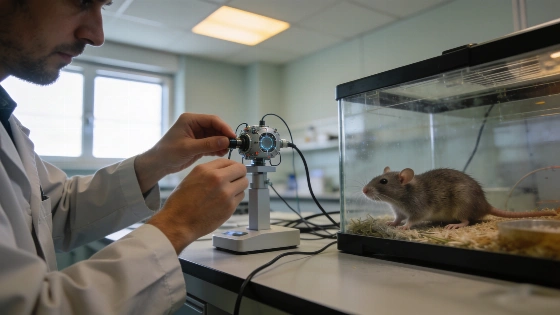
The project involves CIC biomaGUNE and is led by Jordi Llop. The team is testing compounds that may restore or protect myelin in rodent models. It will then assess whether any repair improves cognitive behaviour. This is not a treatment for patients. It is an investigation into another possible mechanism of the disease.
CIC biomaGUNE’s radiochemistry and nuclear-imaging group is working with the team of Carlos Matute at EHU/UPV to investigate whether myelin can be protected or restored in animal models.
Myelin surrounds the axons of neurons and acts as electrical insulation. When it deteriorates, signals travel more slowly and less effectively. Llop's group is examining whether these weakened connections help explain why brain networks lose efficiency even when the neurons are still present.
The biological link is still unresolved.
Researchers have found degraded or deformed myelin in people with Alzheimer's. They still do not know whether that damage helps cause the disease or results from changes caused by it. The project is focused on that question. It looks for ways to prevent or repair these changes early.
The project is part of a broader shift in Alzheimer’s research toward earlier and more precise biological assessment. According to reporting on SEMNIM’s nuclear-medicine discussions, amyloid PET and tau PET are already used to help select patients and evaluate biological changes in clinical research and treatment, while myelin-targeted PET would examine a different process.
Detecting the damage is difficult. Standard brain imaging can examine the brain without surgery, but it may miss subtle changes in the myelin sheath. The team is combining imaging with behavioural tests in animals. It is tracking whether protected myelin is linked to preserved memory or a smaller decline.
One main tool is positron emission tomography, or PET. The technique uses small radioactive molecules as tracers. Here, the tracers are designed to find changes in myelin rather than show general brain activity. When myelin breaks down, it exposes structures that are normally hidden. The marker attaches to those structures and creates a detectable signal.
The approach could eventually allow researchers to monitor myelin repair without surgery in human subjects. That is a future goal, not an established clinical use. For now, the work remains focused on models and on whether a measurable biological change is linked to better cognitive performance.
Early studies using these tools have detected Alzheimer's-associated changes in brain regions with high levels of myelin. The finding supports a wider view of the illness. Alzheimer's may involve problems with communication between neurons as well as protein accumulation. A brain network can contain the right cells and still work poorly if its signals no longer travel with enough speed and precision.
As reported by SINC, the researchers are seeking compounds that could restore myelin in rodents. They are then testing whether the repair produces a cognitive benefit. Reporting by Noticias de Gipuzkoa, Noticias de Álava and PARKe also identifies the work as a collaboration involving CIC biomaGUNE, Jordi Llop's group and Carlos Matute's team at EHU/UPV. If later studies confirm the findings in humans, the same imaging strategy could help detect changes earlier and track the disease more closely.
The project deserves attention because it has not turned a promising hypothesis into a medical promise. Its value lies in testing whether myelin damage is an early, treatable part of Alzheimer's or a secondary sign. Until animal results translate into human evidence, the conclusion must remain measured. Understanding the brain's connections may matter as much as tracking the proteins traditionally placed at the centre of the disease.



