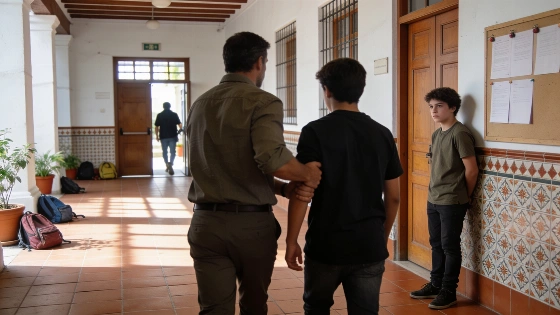
Andalusia has approved a decree making school transfer the main penalty for bullying. The measure aims to better protect victims and clarify procedures for handling such cases. The change follows high-profile failures in anti-bullying protocols.
The Andalusian government has introduced a significant change in its approach to school bullying, making the transfer of the aggressor to another school the preferred disciplinary measure. This move, formalized in a new decree, comes after the tragic suicide of 14-year-old Sandra Peña in Seville last October, which exposed serious gaps in the enforcement of anti-bullying protocols in the region.
Under the new rules, the transfer of a student found guilty of bullying will now be considered the primary sanction in secondary schools, replacing its previous status as just one of several possible measures. The regulation, agreed with unions CSIF, ANPE, and UGT, defines bullying as repeated psychological, verbal, or physical abuse by one or more students against another over a period of time. The decree aims to strengthen the protection of victims and provide schools with clearer, more effective tools to maintain a safe educational environment.
The process for imposing a transfer is not automatic. It requires a formal procedure led by a teacher appointed by the school’s management. This includes opening an official case, hearing from all students involved, notifying legal guardians if minors are implicated, and informing the Educational Inspectorate. The final decision must be based on proven facts, with all parties allowed to present their arguments before the school director makes the ruling.
The new decree also addresses cases where aggression targets teachers or non-teaching staff, introducing faster reporting to the inspectorate. The changes are designed to provide greater legal certainty for school leaders and ensure that anti-bullying measures are applied consistently and effectively. The government’s action follows criticism after it was revealed that Sandra Peña’s school had failed to activate anti-bullying protocols, despite her mother’s complaints and an ongoing investigation by the Juvenile Prosecutor’s Office.
Calls for reform intensified after the incident, with the educational community demanding more robust mechanisms for detecting and responding to bullying. The decree’s introduction follows a national congress on cyberbullying held in February, where the Andalusian authorities first announced plans to toughen sanctions. The new approach is part of a broader trend in Spain to address school safety and student welfare, as highlighted by recent disruptions in the education sector, such as the teachers’ strike in Catalonia over working conditions.
Andalusia’s decision reflects a growing recognition of the need for clear, enforceable policies to combat bullying and protect vulnerable students. According to official data, Spain has seen increased awareness and reporting of bullying cases in recent years, prompting regional governments to review and update their protocols. The new decree is expected to set a precedent for other regions considering similar reforms, as schools across the country seek to balance disciplinary action with the rights of all students involved.