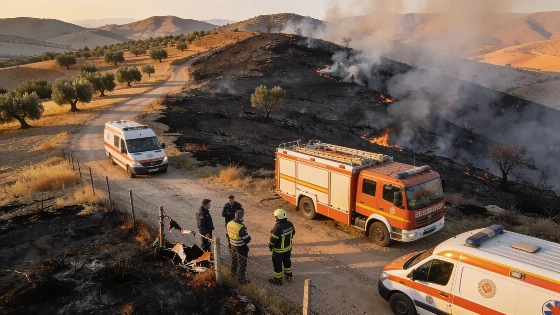
The Junta de Andalucía brought the wildfire that devastated Los Gallardos in Almería under control after it began on 9 July and spread toward Bédar. At the time of the initial update, emergency services were working to extinguish the blaze fully, a process expected to be completed by the end of that week. Later reporting put the final death toll at 15, after injured survivors subsequently died. The fire burned approximately 7,000 hectares and became one of the defining wildfire disasters of Andalusia’s 2026 season.
Judicial authorities in Vera, who were responsible for the investigation, had confirmed the identification of six victims in the initial update: one Spanish national and five foreign citizens. Identification continued as families and local communities awaited further information. President Juan Manuel Moreno said at the time that no additional fatalities were expected among those found at the scene; the toll later rose as injured victims died. Most of those killed were foreign residents. Canalsur described the blaze as Andalusia’s deadliest wildfire of the century.
Sara Aagesen, Spain’s third vice president and Minister for the Ecological Transition and Demographic Challenge, was scheduled to visit Bédar that afternoon. The municipality was among those hardest hit by the fire, which destroyed or damaged homes in the La Serena area, around three kilometres from Bédar. The visit was intended to support affected residents and assess the damage. Months later, communities were still rebuilding homes and restoring daily routines. The loss of pasture also affected livestock farmers.
The Los Gallardos disaster intensified scrutiny of public-safety measures and resource allocation in Andalusia, including the regional Infoca wildfire-management system. Later seasonal accounts recorded 58,735 hectares burned across Andalusia during the maximum-risk period, while another report cited 59,685 hectares. The published totals differed by reporting cutoff or measurement basis. Niebla, in Huelva, recorded the region’s largest burned area. The fire’s scale sharpened debate over prevention and coordination, alongside scrutiny of emergency resources and the debate over firefighting staff reductions.
Wildfires remain a recurring threat in southern Spain, particularly during periods of high temperatures and dry conditions. Andalusia’s emergency response depends on coordination between regional services, including Infoca, and local governments. The Los Gallardos fire renewed attention to prevention and rapid response as recovery and the investigation continued. The Guardia Civil’s rescue of residents trapped by the flames also showed the risks emergency personnel faced. IDEAL later reported that one rescued survivor died from her injuries, bringing the final death toll to 15.