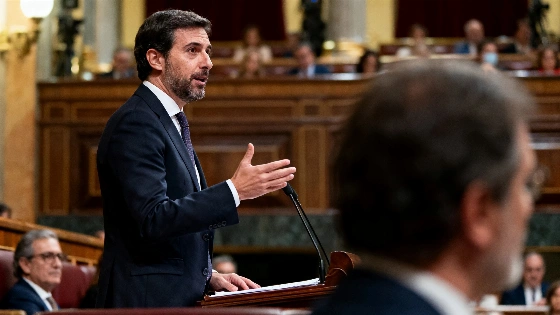
Óscar Puente accuses the Junta de Andalucía of reducing firefighting staff after criticism from Miguel Tellado. The debate follows the Los Gallardos wildfire in Almería and exposes tensions over public service management.
Political tensions erupted in the Spanish Congress after the Los Gallardos wildfire in Almería, with Minister of Transport and Sustainable Mobility, Óscar Puente, forcefully responding to criticism from Miguel Tellado. During a heated session, Puente directly accused Tellado of exploiting the tragedy for political gain and labeled him a "pedazo de sinvergüenza" following Tellado's remarks about the government's handling of the crisis.
Tellado, representing the Partido Popular, had argued that Spain requires stronger public services to prevent and respond to disasters like the Almería fire. He also questioned the central government's focus on effective management. Puente countered by shifting responsibility to the Junta de Andalucía, asserting that recent reductions in firefighting personnel fall under the regional government's jurisdiction, not Madrid's.
The exchange took place against a backdrop of official coordination efforts. Throughout the day, both national and regional authorities emphasized collaboration, with Prime Minister Pedro Sánchez pledging full support to the Junta de Andalucía in managing the wildfire's aftermath. Despite the public dispute, institutional cooperation remained a priority, at least in official statements.
Sources within the Partido Popular clarified that Tellado's speech had been revised to remove any direct references to the PSOE, citing respect for the victims of the fire. They also denied that Tellado's criticism of Sánchez was specifically linked to the Almería incident. The controversy comes at a time when the Partido Popular has chosen to suspend its usual opposition tactics in light of the tragedy, focusing instead on solidarity with those affected.
This episode highlights the ongoing friction between Spain's central and regional governments over responsibility for public safety and emergency response. The debate over resource allocation for firefighting services is not new, but the Almería wildfire has brought it back into sharp focus. Similar disputes have surfaced in other regions, as seen when political leaders have faced scrutiny over their handling of emergencies and public sector staffing. For example, recent coverage of political accountability in Spain, such as the case involving María Jesús Montero and oversight issues within SEPI, illustrates how questions of responsibility and management remain central to the national conversation. More details on such political disputes can be found in this report on internal government tensions.
Wildfires are a recurring threat in Spain, particularly in the southern regions where high temperatures and dry conditions prevail. The effectiveness of firefighting efforts often depends on coordination between national and regional authorities, as well as the availability of trained personnel and resources. The current dispute underscores the challenges of balancing political accountability with the urgent need for effective disaster response, especially as climate risks intensify across the country.