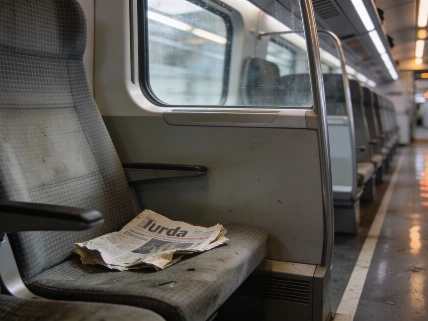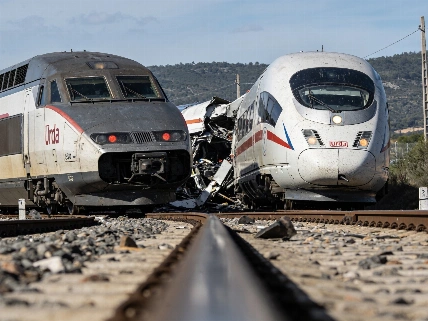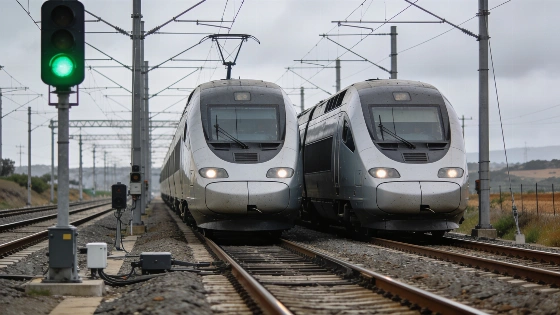
The Angrois rail case took almost 13 years to reach a final judgment. In January 2026, the Audiencia Provincial de A Coruña upheld a two-and-a-half-year prison sentence for the train driver and acquitted Adif’s former head of traffic safety. The Urda investigation may also run for years, even with additional staff assigned to the court. The collision occurred at about 8:53 a.m. on 28 October 2026 on the Madrid-Seville high-speed line.
Aristea Ortiz Tiliakou, who leads Court No. 2 of the Tribunal de Instancia de Orgaz, has a reinforced team so she can focus exclusively on the investigation. Support includes a colleague from the Orgaz courts and five court clerks, as well as three judges from the Red Judicial de Expertos en Gestión de Emergencias y Catástrofes, alongside other staff.
Previous Spanish transport disasters show how long criminal proceedings can take. The investigation into the 2008 Spanair crash, which killed 154 people, lasted four years before it was archived. The case over the 2007 Valencia Metro crash, in which 43 people died, continued for 12 years.
Ortiz has ordered that nothing be removed from the Urda rail site without judicial authorisation. The measure follows the Adamuz crash, where Adif removed rail fragments under investigation, took them to its own facilities and carried out tests. The Guardia Civil said those operations took place without notice or a request for permission. The judge then demanded the material’s return, warning of possible criminal liability.
The two collisions have different investigative focal points. In Adamuz, attention centred on the track and the welds where the derailment occurred. In Urda, early enquiries have focused on Madrid-Puerta de Atocha’s Centro de Regulación y Control. Transport Minister Óscar Puente identified an operator there as having authorised a Renfe AVE to continue at normal speed while an Iryo train stood on the same track several kilometres ahead. Initial reporting also described a possible loss of transmission from the LZB train-protection system, which continuously supervises train movements and can automatically command braking. Investigators were examining whether line-side signalling and other safeguards responded, and whether the authorisation was withdrawn after the control centre learned that the Iryo train remained stationary.
Ortiz ordered the Guardia Civil to collect train-movement data and identify who was in charge when the collision occurred. She also placed the case under judicial secrecy, unlike the Adamuz investigation. The technical inquiry was opened separately by the Independent Administrative Authority for the Technical Investigation of Railway, Maritime and Civil Aviation Accidents and Incidents (AITAT), which registered the case as file 146/2026; its investigators reached the scene on the morning of the collision. The Guardia Civil is conducting the criminal inquiry under judicial supervision. AITAT’s role is to establish causes and recommend corrective measures, while the judicial investigation determines criminal responsibility.
The Guardia Civil is also responsible for securing the trains’ black boxes, which record running data and drivers’ actions. Its criminalistics service has collected samples and documented the site with photographs and drone footage. Police Judicial officers were to question witnesses and people under investigation. The operator identified in connection with the authorisation was questioned with a lawyer present and declined to give evidence. AITAT’s early provisional toll was 74 deaths; a later report republished by the Transport Ministry on 1 November listed 69 deaths and more than 200 injured. The investigation remains at an initial stage, with hypotheses about causes and contributing factors still open.
Transport Minister Óscar Puente characterised the decision to allow the AVE to resume movement after the LZB system failed as the suspected initiating human error, while saying he was not assigning responsibility to anyone at that stage. The Guardia Civil and technical investigators continued examining possible technical faults and control-room procedures, including instructions, LZB error records and maintenance work on equipment supporting the protection system. Spanish railway unions have warned for about five years about pressure to maintain services when safety systems are unavailable or degraded; the inquiry is also examining workload and operating procedures. AITAT has described a possible chain of breakdowns, instructions and actions in which mitigating barriers did not take effect. No final causal finding has been issued.
The Government’s backing for Óscar Puente and calls for political accountability after the collision are covered in earlier reporting.