Left-wing parties in Andalusia demand the regional government accept unaccompanied migrant minors from Ceuta. They warn of court action if agreements are ignored. The standoff exposes deep divisions over migration policy.
Andalusia’s left-wing opposition has given President Moreno’s government an ultimatum: accept unaccompanied migrant minors from Ceuta as agreed, or face a court battle. The warning comes as parliament opens its new session, with Ceuta’s shelters overwhelmed and migration policy once again dividing Seville’s political blocs.
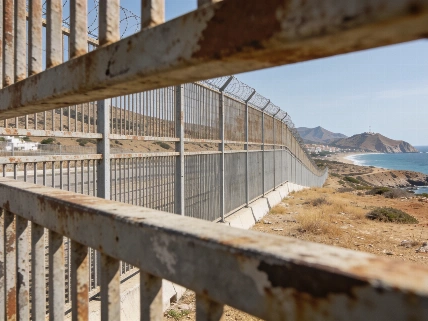
The dispute centers on a protocol signed in March 2019 between the Junta de Andalucía and Ceuta, reinforced by later agreements, most recently in January 2024. These documents require Andalusia to take in minors when Ceuta’s shelters exceed 300% capacity—a threshold now passed, with 1,475 minors registered and only 29 official places available. According to elDiario.es, the January 2024 agreement is "sustainable over time" and remains in force as long as Ceuta’s migration crisis continues, setting up a process for transferring and integrating minors between the two regions.
In August 2026, Spain's central government and autonomous communities approved an emergency credit of €25 million to support Ceuta in caring for unaccompanied migrant minors—a financial measure separate from the mandatory transfer of children to Andalusia.
Despite these commitments, the Andalusian government—run by the Partido Popular (PP) in coalition with Vox—has delayed transfers. The central government has not enforced a national decree to redistribute unaccompanied minors across Spain’s regions in emergencies. Meanwhile, leftist groups (PSOE, Adelante Andalucía, and Por Andalucía) are increasing pressure. Por Andalucía’s Antonio Maíllo and Adelante’s José Ignacio García have both said they will take the matter to court if the Junta does not act, arguing that ignoring the agreements would be a serious breach of duty. PSOE-A, as reported by Democrata, insists the 2024 agreement must be fulfilled and has publicly demanded that the Junta meet its obligations on receiving minors from Ceuta.
Adelante Andalucía has also proposed ending the €2,000 monthly housing allowance for senior Junta officials, part of a broader push against what they see as government excess. PSOE, while not yet threatening legal action, says the January 2024 agreement must be honored and is preparing several parliamentary initiatives to force compliance. “Moreno, an expert in evasions, has a deal he must fulfill,” said PSOE’s María Márquez, signaling that patience is running out. On August 31, 2026, María Jesús Montero said PSOE-A would not attend events in Andalusia if they are "instrumentalized" by PP-A, and called on the Junta to accept minors as required by law, according to Última Hora.
Por Andalucía has registered a non-binding motion demanding the Junta accept minors, strengthen cooperation, and publicly reject racist rhetoric. The PP plans to submit its own motion in support of Ceuta, but spokesperson Toni Martín says existing agreements are being followed and prefers to wait for central government action. He downplays Vox’s hardline stance, despite the coalition pact’s explicit “no to more Menas” clause, and insists the law will be followed.
Vox has called for a review of the migration policy pact with the PP-A, arguing that Andalusia should not facilitate the arrival of new unaccompanied migrant minors and that aid should be directed to Ceuta itself. Meanwhile, other autonomous communities have expressed willingness to participate in the redistribution of minors, indicating that the debate extends beyond Andalusia.
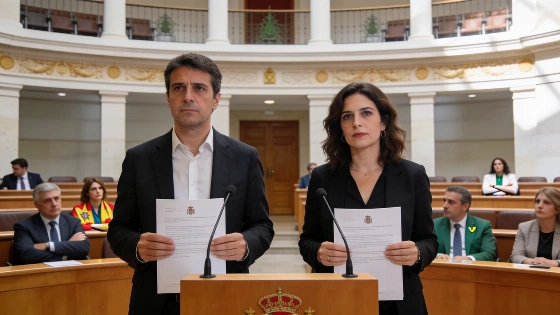
Vox remains firm. Spokesman Javier Cortés said the party would do everything possible to prevent what he called “invaders” from arriving in Andalusia. The alliance between PP and Vox, described by Martín as “in perfect health,” was on display at a flag-raising ceremony for Ceuta at the Andalusian parliament—an event boycotted by all three left-wing groups.
This standoff is not happening in isolation. Ceuta’s struggles with migrant arrivals have repeatedly made national headlines, as seen in recent crisis coverage. The current impasse in Andalusia shows how regional politics and coalition deals can override humanitarian obligations, even when formal agreements exist. The refusal to act leaves Ceuta’s shelters at breaking point and highlights the fragility of Spain’s migration management system, where legal commitments are often hostage to political calculation. The left’s threat of legal action is a direct challenge to the Junta’s credibility and a test of whether the rule of law or partisan alliances will decide policy on one of Spain’s most sensitive issues.