Juanma Moreno urges Madrid to restore the OCON-Sur anti-narcotics unit. The request follows a surge in violent incidents linked to drug gangs. Authorities warn of growing insecurity across Andalusia.
Andalusia’s president, Juanma Moreno, has formally called on the Spanish government to reinstate the OCON-Sur unit, a specialized Guardia Civil team dismantled four years ago that once targeted drug trafficking in the region. In a letter to Prime Minister Pedro Sánchez, Moreno argued that the absence of this elite force has coincided with a sharp rise in organized crime activity, particularly along the Andalusian coast and parts of the interior.
Moreno’s appeal comes after a series of violent incidents that have shaken local communities. In Utrera (Seville), a man was killed in a recent shooting, while just a day later, three people—including a pregnant woman, a 62-year-old, and a minor—were murdered in Isla Cristina (Huelva). The president also referenced the deaths of four Guardia Civil officers—David, Miguel Ángel, Germán, and Jerónimo—who lost their lives in Barbate and Huelva over the past two years while confronting drug-related crime.
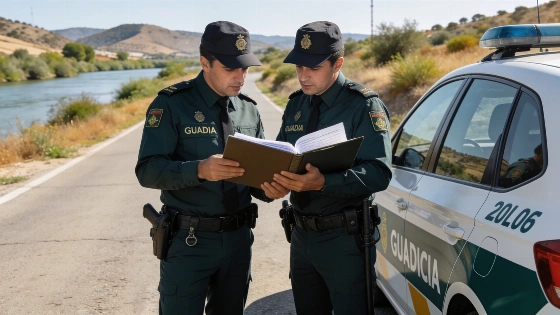
According to the Junta de Andalucía, Moreno warned that the region has become a strategic base for multiple drug clans and trafficking networks. He described how narcolanchas—high-speed boats used by traffickers—now operate openly, even seeking refuge in the Guadalquivir river during daylight hours. The president stressed that the problem is no longer confined to isolated areas but affects the entire coastline and parts of the interior, overwhelming local law enforcement resources.
Moreno insisted that the OCON-Sur unit had proven effective in containing drug mafias before its closure. He argued that current police and Guardia Civil resources are insufficient to counter the scale and sophistication of organized crime now entrenched in Andalusia. The call for action reflects mounting pressure on Madrid to address security concerns in the south, especially as recent events have highlighted the risks faced by both residents and law enforcement.
The debate over police resources is not new. In Madrid, authorities recently arrested a man for impersonating a Guardia Civil officer and defrauding women in fake property and car auctions, as reported in a related case involving police impersonation and fraud. While the contexts differ, both incidents underscore the challenges facing Spanish law enforcement amid evolving criminal tactics.
Spain’s southern coast has long been a key entry point for drugs from North Africa, with traffickers exploiting its extensive shoreline and river systems. The dismantling of OCON-Sur in 2022 was controversial, with critics warning it would weaken the fight against organized crime. The current surge in violence and the targeting of police officers have reignited debate over the need for specialized units. As the government weighs its response, the outcome will likely shape security policy in Andalusia and beyond.