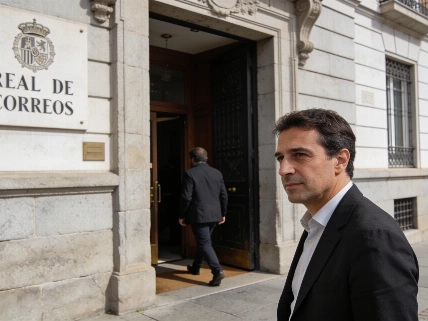
A 52-year-old Spanish man has been arrested in Madrid after posing as a Guardia Civil officer and deceiving women out of large sums of money. The National Police said he used fake credentials, including a replica badge and photographs of himself in uniform, to win his victims’ trust. He promised privileged access to judicial auctions of homes and vehicles. Three women handed over more than €135,000 in cash and high-value gift cards before he disappeared.
The investigation began in August 2024, when a woman reported that a man she had been seeing claimed he could secure a property for her through a rigged judicial auction. She paid him €45,000 in cash, but he vanished after arranging a meeting at a local establishment. Police later uncovered two other cases involving the same method. In each, the suspect posed as a Guardia Civil agent and displayed convincing symbols of authority.
The fraudster showed a badge and institutional emblems, then provided photographs of himself in official attire to appear legitimate. His apparent authority persuaded the victims, all women, to hand over impressive sums. On 7 August 2025, another woman gave him more than €43,000, including three high-value gift cards. The third incident took place on 10 July 2026, when a woman paid €47,000 in cash for a supposed van and properties at auction. She also lost personal belongings and a suitcase she had left in shared accommodation. When she went to the address where the auction was meant to take place, she found it did not exist.
Judicial property auctions are a genuine part of Spain’s legal and enforcement system. A Zaragoza auction-data compilation recorded 224 property auctions since November 2025; 142 were classified as judicial enforcement auctions, and 138 involved residential property. These local figures show that such sales exist within the wider system, but they are unrelated to the alleged Madrid scheme.
Detectives from the Centro district’s Fraud and Theft unit tracked the suspect to Madrid’s Chamartín-Clara Campoamor station, where they detained him on 10 August. He was carrying more than €6,000 in cash and a backpack bearing a Guardia Civil emblem. Police also found four mobile phones and six SIM cards. He now faces charges of fraud and misappropriation and has been placed at the disposal of the judicial authorities.
National crime figures provide broader context, though they do not measure this particular type of fraud. A compilation by Gráficas Electorales, based on reported data from Spain’s national, regional and local police forces, puts the country’s 2025 rate at 50.3 known criminal offenses per 1,000 inhabitants. The measure covers offenses known to participating agencies, not all criminal conduct.
Authorities in Spain regularly urge the public to verify credentials before handing over money or personal information. Impersonation and fraud involving fake officials are not uncommon, and official-looking symbols and uniforms remain a familiar tactic. In a separate incident earlier this year, authorities in Castellón neutralized dozens of Civil War-era shells found in Villores. The operation reflects the range of cases Spanish police handle, from historical munitions to modern threats. Details are available in this report on the discovery and disposal of wartime munitions in Castellón.
Spain’s law enforcement agencies continue to urge vigilance when people claim special access to official processes or property deals. They advise reporting suspicious activity promptly to the authorities.