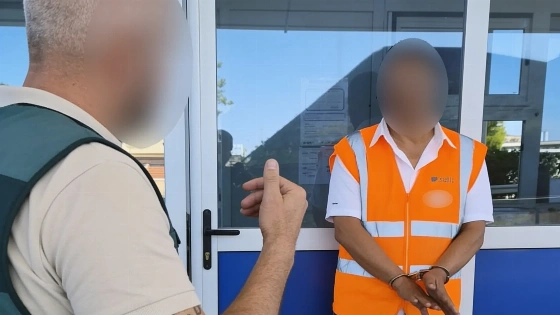
A long-serving employee of the AP-7 motorway concessionaire has been arrested by the Guardia Civil, accused of systematically diverting cash from toll payments on the Cartagena to Vera stretch. Investigators say the worker allegedly manipulated toll transactions to pocket more than €1,200 over several months. Cartagena to Vera is one of the AP-7 sections where tolls remain in operation.
The alleged scheme involved substituting tickets: when a driver paid cash for a long-distance journey, the employee would scan a ticket for a shorter, cheaper trip instead. The system would then register a lower amount, while the worker allegedly kept the difference between the cash received and the recorded toll.
The concessionaire’s legal team began noticing discrepancies in cash collections in June and filed a formal complaint with the Guardia Civil. After an investigation, officers identified the employee as the suspected source of the irregularities. He was caught at his post with several low-value tickets hidden and ready for alleged future use.
Following his arrest, the suspect was released pending charges and is awaiting a summons from the judicial authorities. Article 248 of the Spanish Penal Code defines fraud as obtaining an economic benefit through sufficiently deceptive conduct that causes another party financial harm. If the alleged conduct is charged and proved as ordinary fraud, the stated penalty range is six months to three years in prison. The legal classification would depend on the evidence and the court’s findings: where entrusted money is allegedly appropriated, Article 253 on misappropriation may also be relevant, while Article 249 covers specified computer-manipulation and non-cash-payment offences.
Because the alleged ticket substitutions occurred repeatedly over several months, prosecutors could also seek to treat the acts as a continued offence under Article 74. That provision concerns repeated offences linked by a common plan or similar circumstances. Whether it applies, and any resulting sentence, would be for the court to determine. The reported potential range in this case is between one year, nine months and one day, and three years.
How the Fraud Worked
The alleged fraud targeted cash transactions at toll booths, exploiting the gap between what drivers paid and what the system recorded. The employee’s familiarity with toll operations allegedly kept the discrepancies from being detected for months, until the concessionaire’s internal controls flagged anomalies in collections.
When confronted, the worker was found with a stash of tickets from short trips, which he allegedly intended to use to continue the scheme. The Guardia Civil’s intervention ended the operation, and the case is now before the judicial authorities.
Legal and Practical Context
The article also cites Article 75 of Spain’s Traffic Law, which describes failure to pay a toll as a minor infraction punishable by a €100 fine. Abandoning a vehicle at a toll as a form of protest can raise the penalty to €200. The allegations here concern an employee’s handling of toll receipts, rather than a customer’s failure to pay.
The case highlights the importance of oversight in toll collection, particularly when transactions involve cash. Although automated and electronic payment systems are widely used on Spanish motorways, cash transactions can still create opportunities for discrepancies between the amount collected and the amount entered in a toll system.
As Spain continues to modernize its road infrastructure, the allegations point to the need for effective controls over cash handling and transaction records to protect both concessionaires and the public.