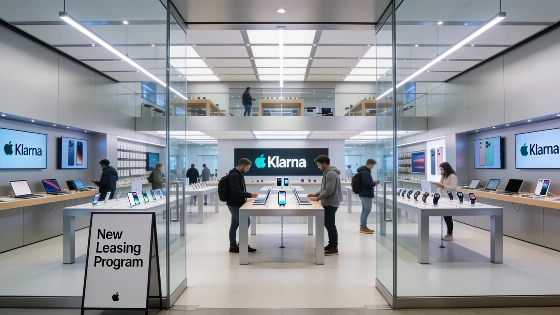
Apple has launched Apple Upgrade, a device-leasing program in the United States provided by Klarna Inc. It covers eligible iPhone and Apple Watch models, as well as Mac and iPad models, replacing Apple’s previous iPhone Upgrade Program and iPhone Payments offerings in the US. Customers can apply through Apple’s website, the Apple Store app, or at Apple retail stores.
Lease terms run for 12 or 24 months for iPhone and Apple Watch, and 24 or 36 months for Mac and iPad. Published starting monthly payments are $17.99 for iPhone, $11.99 for Apple Watch, $24.99 for Mac, and $11.99 for iPad. These are entry prices, not universal rates. Payments depend on the selected device and lease term, and may also vary with taxes, eligibility, and trade-in credit. Apple’s terms say advertised payments may exclude a trade-in’s estimated value. For iPhone leases, customers must select an eligible carrier. The first payment is due approximately 30 days after the device ships or becomes available for pickup.
Customers can use a trade-in to reduce their monthly payments. Reporting on the launch says Apple Card users can receive 3% cash back when paying through the program. The trade-in estimate, taxes, carrier requirements, lease duration, and any end-of-term purchase amount all affect how the total cost compares with carrier financing or an outright purchase.
Apple describes the arrangement as “a consumer lease, not a purchase or loan.” Approval depends on eligibility and creditworthiness. Launch coverage reports that Klarna conducts a soft credit check, which does not affect an applicant’s credit score. That inquiry does not guarantee approval. Klarna Inc. provides the lease, whose obligations differ from those of a conventional installment loan or Klarna’s buy-now-pay-later products.
At the end of the term, customers can return the device, buy it with a one-time payment, or upgrade to a newer model. Returning the device and completing the required closing process ends the lease. Apple’s terms also warn that ending a lease early may result in a large charge, making the program different from a no-obligation installment plan. Customers should weigh the lease conditions and any purchase amount alongside the monthly payment when assessing the cost of keeping a device.
The rollout coincides with Apple’s decision to discontinue its previous iPhone payment programs and extends leasing across several product categories. The program is available online and at Apple Store locations across the US. It gives customers who do not want to purchase a device at the outset an alternative for spreading payments over a defined term.
Klarna is widely recognized for its buy-now-pay-later (BNPL) services, but the partnership uses a different structure from traditional installment loans. More Americans are turning to alternative financing for technology purchases. A Gallup survey found that over half of US consumers have used installment plans for online shopping, reflecting a broader shift toward flexible payment solutions.
Technology firms and financial service providers have increasingly partnered to make high-value products more accessible. A similar trend emerged when Indra and Bold joined forces to strengthen Catalonia’s tech sector, as highlighted in this report on regional industry collaboration. Such alliances reflect a growing focus on consumer flexibility and the industry’s response to changing purchasing habits.
Apple Upgrade gives customers an alternative to outright purchases and standard financing, while the lease agreement governs ownership and return conditions. Its trade-in options and multiple term lengths are intended for consumers looking to manage costs and keep up with new releases. Credit-based approval, return requirements, and possible early-termination charges remain part of the arrangement.