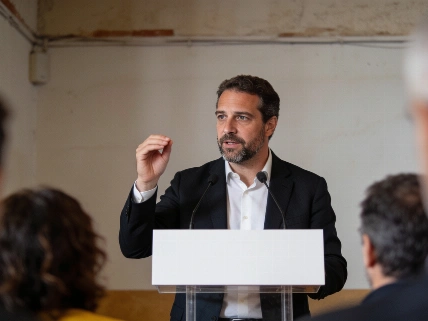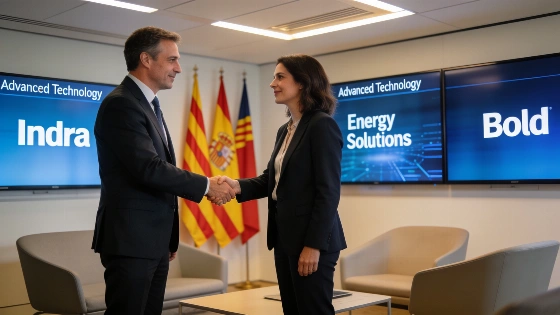
Indra has formalized a strategic partnership with Bold, a Montmeló-based technology firm, marking a impressive shift in the company’s approach to Catalonia. Enric Blasco, Indra’s director in Catalonia, announced the agreement, which aims to position Indra Group as a driving force in the local industrial environment. The company plans to identify the region’s technological capabilities and connect them with its strategic programs, opening new avenues for growth across Catalonia’s industrial field. Blasco has described the territorial model as an effort to strengthen the region’s industrial and technological capacity, including its defense environment. He argues that defense investment should be seen “not as an expense, but as a necessary condition for growth.”
Bold specializes in advanced energy-storage systems and high-performance batteries. It also develops battery management systems (BMS) and intelligent energy-management solutions powered by artificial intelligence. Indra says this is the first strategic alliance initiated by its newly established territorial delegation. The partnership reflects its commitment to strengthening institutional ties and exploring initiatives to improve Catalonia’s technological and industrial capacities. Bold’s industrial activity also extends into motorsport: the Montmeló-based manufacturer is reported to have agreed to supply hybrid batteries to IndyCar from 2028. That technology-supply arrangement is distinct from discussions about a proposed IndyCar presence at the Circuit de Catalunya, whose event terms were reported separately.
Blasco said Indra’s new model in Catalonia is built on closer ties with local institutions and businesses, with innovation centers also part of the approach. It is designed to speed up the identification of technology partners, encourage industrial collaboration and launch projects that build strategic capabilities. Indra reports a 57% increase in procurement volume from Catalan suppliers during the first half of the year, already matching the total budgeted for the entire previous year. A separate example of Indra’s investment in regional technology is its €10 million contribution through IndraMind to Qilimanjaro Quantum Tech’s €19.6 million funding round. Founded in Barcelona in 2019, the quantum-computing company plans to use the capital to industrialize its computers and develop new chip generations, while expanding manufacturing and deployment capacity, information from Quantum Spectator.
The initiative is part of Indra Group’s broader strategy to establish Catalonia as a leading industrial and technological hub in southern Europe. At the presentation of the company’s Growth and Investment Plan for Catalonia, Indra president Ángel Simón underscored this ambition. The Spanish multinational, recognized as one of Europe’s foremost defense and aerospace companies, also works in advanced technologies. It closed the 2025 fiscal year with revenues of €5.457 billion, a local presence in 46 countries and commercial operations spanning more than 140 markets. Its ownership adds to the strategic context: Spain’s state holding company SEPI is Indra’s principal shareholder, with a 28% stake, according to October 2026 reporting by El Nacional.
Indra’s regional positioning is part of a wider debate about defense capacity and technological sovereignty in Europe. Blasco has pointed to civilian applications of defense-related technologies, including satellite observation for monitoring extreme weather and drought, alongside data-center infrastructure. In comments reported by Via Empresa, he described these civilian uses as part of the case for building a stronger industrial and technological base. The investment in Qilimanjaro also connects the Catalan strategy to advanced computing and efforts to strengthen European capabilities in quantum technology.
Strategic partnerships such as the one between Indra and Bold are increasingly shaping Spain’s technology and defense sectors. The focus on regional collaboration reflects a broader trend as companies seek to draw on local expertise and supply chains to remain competitive. Similar models are being explored in other regions as part of a nationwide push for innovation and industrial ability to recover. Spanish sports has also drawn attention recently: the debate over Paula Badosa’s return to the WTA Top 100 was overshadowed by a controversial incident in Iasi, as detailed in this recent report on the challenges faced by Spanish athletes. These examples show how local and national dynamics continue to influence Spain’s position in basic sectors.