Arenal Sound 2026 opens in Burriana with 300,000 expected visitors. Organizers adjust logistics to reduce environmental impact as a major wildfire burns 20 km away. Security and transport measures are reinforced.
The Arenal Sound festival in Burriana, Castellón, is set to welcome over 300,000 attendees this week, even as a major wildfire continues to affect nearby municipalities just 20 kilometers inland. With the event scheduled from July 30 to August 2, organizers have confirmed that the festival will proceed as planned, despite the ongoing emergency in the province. The Guardia Civil has increased its presence, bringing in officers from other regions to ensure both festival security and support for wildfire response efforts.
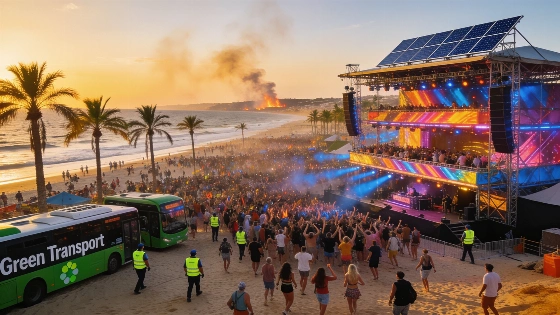
For the sixteenth year, Arenal Sound transforms the coastal town of Burriana, population 35,000, into Spain’s largest temporary youth city. The festival’s demographic impact is significant, with thousands of young people arriving from across the country. This year’s edition stands out not only for its scale but also for its commitment to minimizing environmental impact. Organizers have overhauled logistics, focusing on energy efficiency and sustainable transport. The entire shuttle bus fleet now runs exclusively on renewable HVO fuel, reducing emissions by up to 90% compared to traditional diesel. Additionally, the main Repsol stage and several common areas are powered by renewable energy sources, including expanded solar panel installations.
The festival’s lineup reflects the shift in Spain’s music scene, with global pop, reguetón, and trap dominating the program. Thursday’s opening night features international acts like Myke Towers and María Becerra, alongside Spanish artists such as Íñigo Quintero and Pignoise. Friday brings electronic headliners Dimitri Vegas and Omar Montes, while Saturday and Sunday continue with Ana Mena, Delaossa, W&W;, and JC Reyes, among others. Multiple stages, including Negrita Stage and Cutty Sark Beach Club, are strategically placed to manage crowd flow and offer diverse musical experiences.
Energy management remains a central challenge. The festival, in partnership with Repsol for the third consecutive year, has replaced conventional fuels with low-carbon alternatives. According to organizers, the use of renewable fuels and biocombustibles will prevent an estimated 156 tons of CO₂ emissions, with around 56,000 liters of renewable fuel deployed. Within the festival grounds, solar-powered lighting and charging stations have been expanded, and drone shows will replace traditional fireworks to further reduce environmental disturbance.
Local authorities and festival management are working to balance the economic and cultural benefits of Arenal Sound with the need to protect the coastal environment and minimize disruption for residents. The event’s proximity to the wildfire zone has heightened attention to safety and logistics. Recent emergencies in the region, such as the mass evacuations in Castellón described in reports on the wildfire’s impact on local communities, underscore the importance of coordinated response and contingency planning.
Spain’s festival sector has grown rapidly in recent years, with events like Arenal Sound playing a key role in regional tourism and youth culture. The focus on sustainability and safety at this year’s edition reflects broader trends in event management across the country. As Burriana braces for an influx of visitors, the festival’s ability to adapt to environmental and logistical challenges will be closely watched by both authorities and the public.