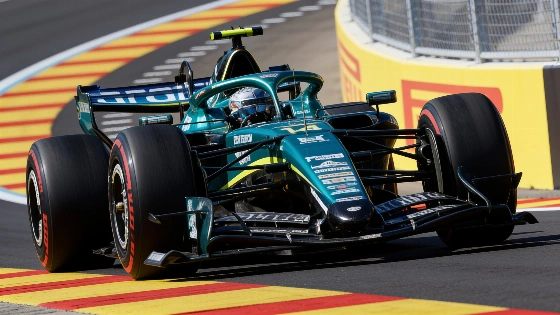
Aston Martin shows up in Baku with a lighter car and a stack of upgrades. But with the Honda engine struggling on the city’s long straight, even Fernando Alonso says scoring points will be tough.
Aston Martin is rolling out its AMR26 in Baku, but the team knows the challenge is bigger than just chasing lap times. The car is lighter than ever and packed with new parts. Still, the Honda engine’s limits leave the team with little hope for points on the track with the longest straight in Formula 1.
Fernando Alonso doesn’t hide how hard it will be. “No es el mejor circuito para nosotros, es una de las carreras del calendario que vemos como complicadas. Probablemente Las Vegas será la próxima. Intentaremos hacerlo lo mejor que podamos, será difícil pasar la Q1 y sumar puntos,” he tells AS. Alonso knows Baku’s 2.2-kilometer straight will show every weakness in the power unit. The team has shifted focus. Now, it’s about learning as much as possible, not chasing results.
Aston Martin plans to halt development of the AMR26 after the Azerbaijan Grand Prix and shift its main focus to the 2027 car, as confirmed by several independent publications citing technical director Enrico Cardile.
Technical boss Mike Krack and his crew are trying to squeeze every bit of performance from the new upgrades. “Un coche más ligero siempre es un coche más rápido,” Krack says. The AMR26 has lost weight all season and is now close to the minimum allowed. These small changes won’t bring a huge jump in pace, but they do give “prestaciones gratis”—free performance—especially for tire management and balance. But the real test is the long straight. That’s where energy runs out and every team has to make tough calls on battery use.
Alonso points out how tricky the strategy is: “La recta es muy larga y tenemos que ver la diferencia (de velocidad) entre las vueltas de calentamiento y las vueltas rápidas, porque hay dos kilómetros de recta.” He remembers similar problems at Zandvoort, but Baku is less forgiving. There’s little space for slower cars to move aside, especially between turns 18 and 19. The team will have to plan carefully in the drivers’ briefing to avoid dangerous speed gaps and traffic messes in qualifying.
The tight corners in sector two might help a bit, but the main problem stays the same. The AMR26’s energy management is stretched on the main straight. The team is forced to try both Baku-specific fixes and ideas for future races, even looking ahead to 2027. Alonso is blunt about the bigger issue: these cars feel completely different from track to track. “Ha habido carreras buenas y malas, y tenemos que aprender de esto. Mónaco y Budapest, por ejemplo estuvieron bien. Pero hubo carreras muy malas como Silverstone, que es un circuito increíble pero ya no es divertido.” He wants changes for 2026. He thinks cutting peak battery power and focusing on steady output could make racing better and less predictable.
According to independent technical analyses, Aston Martin began the season with a car heavier than the target and has been gradually reducing weight throughout the championship. The final Baku upgrade package is primarily focused on reaching the minimum weight limit of 768 kg, a move that team principal Mike Krack described as 'free performance' that will be especially valuable on Baku's long straight.
For Aston Martin, Baku isn’t about instant results. It’s about collecting data, fine-tuning setups, and pushing the car’s development. The team’s approach is similar to what SEAT has done under Volkswagen as priorities shift in the industry.
Aston Martin is willing to experiment, even knowing the odds are against them. They see the push for a lighter, more efficient car as more than just chasing lap times. It’s about adapting to a sport where technical rules and power unit politics often decide who wins. The scoreboard in Baku may not show it, but every lap and every tweak is laying the groundwork for what comes next.