SEAT, once the engine of Spanish mobility and ambition, now stands at a crossroads. As Volkswagen restructures and bets on CUPRA, the fate of SEAT hangs in the balance, raising questions about Spain’s industrial direction.
SEAT, once a symbol of freedom and progress for Spanish families, now faces the real possibility of disappearing. The brand that put Spain on wheels is caught up in Volkswagen’s restructuring, and there is growing talk that SEAT could be gone by 2029 as the German group shifts its Spanish focus to CUPRA.
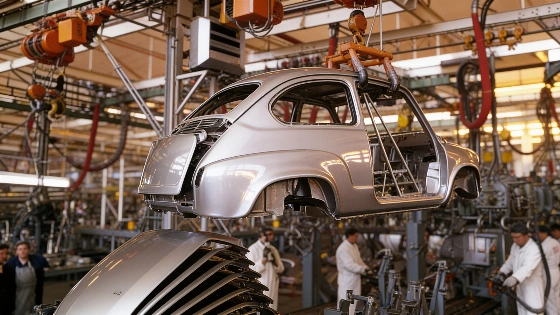
For decades, SEAT was more than just a car company. It stood for national ambition and the idea that Spain could build and move forward after years of hardship. The SEAT 600, especially, became a ticket to new experiences, letting families travel and claim a sense of independence that had been out of reach. SEAT’s legacy isn’t just the more than twenty million vehicles built over 75 years, but the memories and hopes it carried for generations.
According to La Vanguardia, SEAT's workforce has shrunk by nearly 1,700 employees—about 11%—over the past five years as part of factory adaptation agreements with unions.
The latest signals from Volkswagen are hard to ignore. The group has already agreed to cut around 50,000 jobs across Volkswagen, Audi, Porsche, and CARIAD by 2030. Now, SEAT’s future is under review. There’s no official decision yet, but all signs point to a slow phase-out. Even the fact that this is being discussed is a warning about Spain’s loss of control over its own industry.
SEAT’s story began in 1950, part of a national push to industrialize and modernize. Factories like SEAT, ENDESA, ENASA, and ENSIDESA were the backbone of a country trying to move past the civil war and build a future. This wasn’t just about economics—it was about dignity and the belief that a nation should make what it needs. Over time, much of this public industry was privatized, sometimes for economic reasons, sometimes at the cost of losing control over key sectors.
Today, Spain’s economy relies heavily on services and tourism, while decisions about its industry are made far from Madrid or Barcelona. SEAT’s integration into Volkswagen in 1990 was a turning point, and now, 36 years later, the brand’s survival is in doubt. The risk is clear: when a country stops making what it needs, it becomes a consumer, not a creator, and loses the ability to shape its own future.
Official statements from Volkswagen confirm that several scenarios remain possible for SEAT after 2030, but no final decision has been made. Independent industry summaries, such as those from OICA, emphasize that a gradual phase-out is only one of the options under consideration, and already announced SEAT models and updates are still expected to launch as planned.
There’s a bitter irony in how the car, once a symbol of progress, is now seen by some as a problem to be managed or even eliminated. Environmental rules, low-emission zones, rising fuel prices, and changing political attitudes have made private mobility a target. The same independence the SEAT 600 once promised is now viewed with suspicion by some, as if the freedom to travel is an outdated luxury. At the same time, European policy has often sent mixed signals to both carmakers and buyers, making the future less clear for brands like SEAT.
The challenges aren’t just political. Competition from China, rising costs, and strategic mistakes have chipped away at Europe’s lead in car manufacturing. China is building a huge electric vehicle industry and securing supply chains, while Brussels has responded with regulations and deadlines instead of a real industrial plan. The result is that Europe risks losing its factories while others ramp up production. This isn’t just Spain’s problem—it’s Europe’s.
For many, seeing a well-kept SEAT 600 on the road is more than nostalgia. It’s a reminder of a Spain that wanted to build and own its future. That ambition is now at risk of being replaced by resignation, as decisions made in distant boardrooms decide the fate of national icons. Losing SEAT would not just hurt workers, engineers, and suppliers in Barcelona and Martorell—it would mean losing a piece of collective memory and industrial pride.
The effects of an aging car fleet and shifting industrial priorities are already being felt, as reported earlier. If SEAT disappears, it would deepen the sense that Spain’s role is to consume, not create, and that the era of national ambition has given way to dependence on decisions made elsewhere.
SEAT’s fate isn’t sealed, but the warning signs are clear. The brand’s survival is about more than jobs or nostalgia—it’s about whether Spain still believes in its ability to produce and shape its own future. If SEAT vanishes, it won’t be because the market demanded it, but because leaders let the country’s industrial backbone fade. A nation that stops building soon finds itself relying on those who do.