Journalists Complain About Restrictions on Spanish at 2026 World Cup Press Conferences. Journalists face difficulties working in Spanish at 2026 World Cup press conferences. The lack of simultaneous translation and the prioritization of English have sparked discontent. The issue is especially pressing in Mexico.
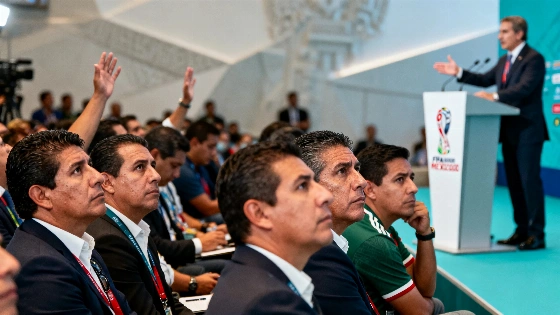
At the start of the 2026 FIFA World Cup in Mexico, Canada, and the USA, Spanish-speaking journalists have encountered unexpected difficulties: at several press conferences, they are being restricted in their ability to ask questions in Spanish. According to accredited reporters, including at meetings with representatives of the Brazil and Morocco teams, moderators are asking them to switch to English to speed up proceedings and avoid delays caused by the lack of simultaneous interpretation.
The situation has caused a stir, as Spanish is one of the key languages of the tournament and Mexico is among the host countries. Many journalists note that the absence of interpreters at certain venues essentially excludes Spanish from the working languages, despite the significant share of Spanish-language media and fans. As a result, some questions are either not accepted or translated unofficially, complicating comprehensive coverage of the events.
Organizers have not yet provided an official explanation regarding this practice. According to correspondents on site, the decision to use only English is motivated by the need to maintain the pace of press conferences and minimize technical difficulties. However, for Spanish-speaking media representatives, this has become an unexpected obstacle, especially in light of expectations for a tournament that is also being held in Mexico.
The issue of language accessibility goes beyond a technical detail: for many media outlets from Latin America and Spain, the restriction of the Spanish language is seen as a reduction in the transparency and openness of the tournament. Given the traditionally high interest in the 2026 World Cup in Spanish-speaking countries, such limitations raise questions about equal opportunities for all participants in the media process. Similar debates over access to information have already arisen at major sporting events, but this time they have become especially acute due to the tournament's geography.
Meanwhile, attention to the organization of the 2026 World Cup remains high for other reasons as well. For example, recently changes to the Spanish television schedule due to tournament matches also sparked discussions among viewers and journalists. All this highlights how important both the sporting and informational components of the championship are to the Spanish-speaking community.
For reference: Spanish ranks second worldwide by number of native speakers, and Mexico is the largest Spanish-speaking country. At previous World Cups, FIFA usually provided simultaneous interpretation into the main languages, but in 2026 some events are taking place without this option. This may affect the quality and comprehensiveness of the tournament’s coverage in Spanish-language media, as well as the perception of the 2026 World Cup as a truly global event.