Court Trial Begins in Badajoz over Pedro Sánchez’s Brother and Former PSOE Leader. A high-profile court case opens in Badajoz concerning the appointment of Pedro Sánchez's brother. The defense is seeking dismissal of the case, citing procedural violations during the investigation. The court is expected to hear testimony from 43 witnesses.
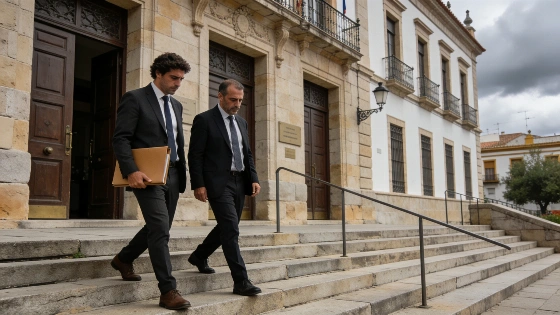
Today in Badajoz, a court case begins over alleged irregularities in the 2017 appointment of David Sánchez, the brother of Spain's Prime Minister, to a managerial position at the Diputación de Badajoz. The proceedings take place amid recent reports of an investigation into a pressure campaign targeting judges, including magistrate Beatriz Biedma, who handled the case. According to investigators, individuals linked to the PSOE may have been behind attacks against judges, allegedly aiming to "sabotage the process."
David Sánchez and former Extremadura Socialist leader Miguel Ángel Gallardo, who are not prosecuted by the public prosecutor, face the risk of up to three years in prison on charges of administrative corruption and influence peddling. These charges are brought by private plaintiffs, including Manos Limpias, as well as representatives of the PP, Vox, and far-right organizations. Nine other defendants, all former Diputación employees and ex-La Moncloa official Luis Carrero, face a requested sentence of one and a half years in prison.
The defense for all 11 defendants plans to file new motions in the first two days of the hearings to dismiss the case or invalidate parts of its materials. Lawyers cite violations of the defendants' rights, including the mass seizure of Guardia Civil business correspondence and, in their view, the 'prospective' nature of an investigation launched without sufficient cause. Similar arguments had previously been rejected by the court, but the defense aims to use them for possible future appeals.
In November, David Sánchez unsuccessfully attempted to have the entire court recused, claiming bias. This week, the court will hear from 43 witnesses, including nine UCO officers who conducted the investigation, as well as conservatory directors and candidates for the contested position. Among the witnesses is Antonio Balas, head of the UCO’s economic investigations department, who, according to investigators, was also the target of a discrediting campaign.
The court must determine whether the process of creating and appointing the Coordinator of Conservatories of the Diputación de Badajoz was legal, or, as the investigation alleges, whether the position was created for a specific candidate. Investigators point out that David Sánchez knew about the vacancy in advance and took part in the competition merely to follow procedure. Sánchez himself insists that he found the announcement online and that his brother was not involved in the process, since he had already left the post of PSOE secretary.
A key part of the prosecution's case is the assertion that Sánchez used his influence to change working conditions in his favor and to secure a job for his acquaintance Luis Carrero, who had previously worked at La Moncloa. Regarding Miguel Ángel Gallardo, the court will have to determine whether he was aware that the position was being created for Sánchez, or, as the defense maintains, was unaware of Sánchez’s participation in the competition.
The hearings in this case have coincided with a renewed focus on investigations involving other politicians. In Spain, there have already been instances where corruption cases at the highest levels of government have drawn significant public attention. For example, earlier investigation into transfers to the daughters of former Prime Minister Zapatero also sparked widespread public response.
The trial of Pedro Sánchez's brother may drag on: after the witness testimonies, the accused will begin giving statements, with some hearings expected to take place in the second week of June. In Spain, corruption cases involving government institutions traditionally attract heightened attention, and the rulings often set precedents for future cases. It is important to note that the final decision in this case will be made only after all stages of the hearings have concluded and any possible appeals have been considered.