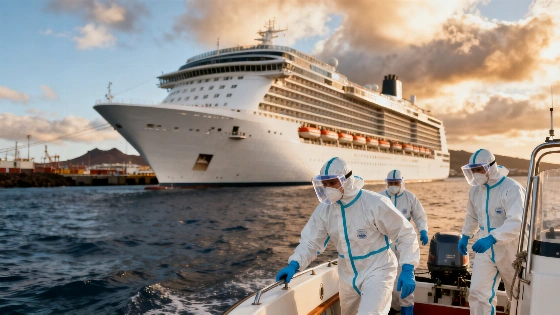
MV Hondius with Hantavirus Patients to Arrive in Canary Islands. An outbreak of hantavirus has been detected on the cruise ship MV Hondius, en route from Argentina. Spain will receive the ship in the Canary Islands for humanitarian reasons, with the risk to the local population assessed as extremely low.
An outbreak of hantavirus aboard the cruise ship MV Hondius, en route from Argentina and currently off the coast of Cape Verde, has drawn attention to this rare but potentially dangerous infection. The Spanish Ministry of Health has confirmed that the vessel will be received in the Canary Islands on humanitarian and international legal grounds. This decision is based on obligations to provide assistance established by international agreements.
A special protocol developed by the World Health Organization and the European Centre for Disease Prevention and Control has been activated to receive the vessel and ensure safety. There are 147 people from 23 countries on board the MV Hondius, including 14 Spanish citizens. According to Spanish authorities, the risk to the country's population is minimal.
What is hantavirus
Hantaviruses are a family of viruses capable of causing severe illness and even death. The main route of transmission is contact with infected rodents. The virus enters the human body primarily through inhalation of particles containing rodent excretions—urine, feces, or saliva—especially in enclosed or poorly ventilated spaces. Direct contact with contaminated surfaces can also pose a risk.
Human-to-human transmission of the virus is extremely rare. When it does occur, it involves close and direct contact with a person who is already ill and exhibiting symptoms. Thus, hantavirus does not spread easily and cannot be transmitted through casual encounters.
Features of the MV Hondius outbreak
In Europe, Puumala and Dobrava types of hantaviruses are most commonly encountered. These are usually linked to exposure to environments where rodents live. For these variants, no cases of human-to-human transmission have been recorded.
In the case of MV Hondius, the exact point of infection has not yet been determined. Three scenarios are under consideration: before boarding the vessel, during excursions in rodent habitats, or directly onboard. An epidemiological and laboratory investigation is underway under the auspices of the WHO to precisely identify the source and circumstances of the infection.
Symptoms and course of the disease
The incubation period for hantavirus infection usually ranges from one to three weeks, but may vary from 3 to 45 days. Early symptoms resemble the flu: fever, muscle aches, chills, headache, nausea, vomiting, abdominal pain, or diarrhea.
In some patients, the condition may sharply deteriorate after a few days. Possible complications include respiratory failure, pneumonia, acute respiratory distress syndrome, or shock, all of which require immediate medical attention and intensive care.
Patient data and actions by the authorities
According to the latest information from the Ministry of Health as of May 5, six cases of illness are linked to the MV Hondius outbreak, two of which have been laboratory confirmed. Three deaths have been reported. The WHO international report lists seven cases (both confirmed and suspected) and also three deaths.
There is no specific treatment for hantavirus. Severe cases require hospitalization in intensive care units with the possibility of respiratory support.
Procedure upon vessel arrival
Before the MV Hondius docks in the Canary Islands, specialists will assess the condition of passengers and crew to determine who needs urgent evacuation. The rest will be brought ashore, undergo medical examination and receive assistance if necessary, after which they will be sent to their countries of residence.
All procedures will be organized in specially designated areas and involve separate transport, in order to avoid contact with the local population and ensure the safety of medical staff. The European Centre for Disease Prevention and Control also assesses the risk to European residents as extremely low, since all necessary measures are being taken and the virus does not transmit easily between people.
Recommendations for the public
In the current situation, it is important to remain calm and not give in to panic. According to the Ministry of Health, the risk to Spain remains very low. However, understanding the ways the virus spreads helps to act sensibly. Practical recommendations include avoiding contact with rodents and places where their droppings may be present, as well as paying close attention to symptoms after any potential contact with a source of infection.
If you experience signs of respiratory problems or if your condition worsens after several days of illness, you should seek medical attention immediately. It is also important to follow official information on the MV Hondius situation and the measures being taken in the Canary Islands.
The situation is being controlled through international protocols and coordinated action. For the Spanish population, the main message from the authorities remains unchanged: the risk is extremely low, but all necessary precautions and monitoring of patients’ condition will be fully ensured.