Ayuso Declares Madrid's Independence Amid Conflict with Central Government. Madrid celebrated its main regional holiday without the participation of central authorities. Ayuso emphasized the capital's independence and criticized attempts at pressure. At the center of attention are the conflict with the government and new challenges for the region.
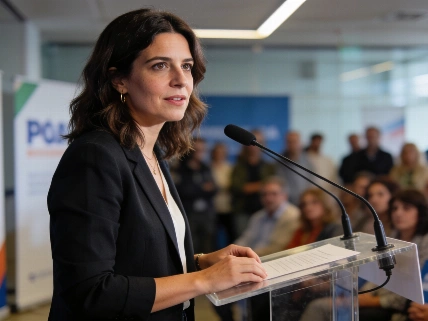
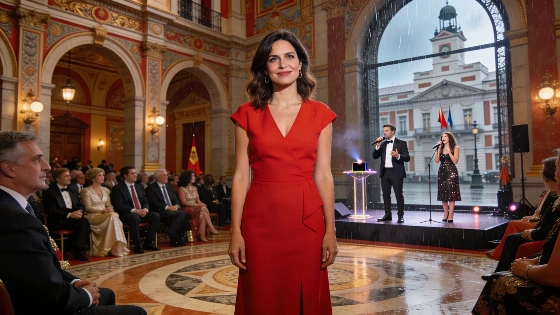
On May 2, Madrid celebrated its main regional holiday — Autonomy Day, which this year took place without representatives from the central government and with a marked emphasis on the political independence of the capital. At the official ceremony in the regional government building on Puerta del Sol, Madrid President Ayuso again stressed that the region will not allow anyone to dictate terms, and any attempts at pressure will be firmly resisted.
Political focus
This year, the event stood out not only because of the absence of representatives from the Spanish government, but also because the traditional military parade was canceled. Madrid authorities explained this by a decision of the Ministry of Defense, which had already withdrawn the armed forces from participation in the festival in 2025. Against the backdrop of rainy weather and increased attention to political statements, Ayuso emphasized that Madrid society is united around the idea of freedom and does not yield to external control. Her speech contained a clear allusion to the ongoing conflict with Prime Minister Pedro Sánchez, who was also not invited to the ceremony.
Conflict with the opposition and Vox
This year, the regional authorities did not invite representatives of the PSOE, citing the socialists' boycott of last year's military parade. With no central government officials present, the political discussion shifted to internal regional issues. A Vox representative in the Madrid Assembly reminded about the upcoming vote on the 'national priority' principle, which gives advantages to Spaniards in the allocation of social benefits. Ayuso, in turn, once again stated that Madrid would remain an open and multicultural region that respects ideological diversity and traditions.
Awards and Symbols
As part of the celebration, awards were presented — the Grand Crosses of the Order of Dos de Mayo. Among the recipients were ONCE president Miguel Carballeda, entrepreneur and Atlético de Madrid president Enrique Cerezo, as well as a group of schoolchildren from Parla who rescued a woman in Ireland. Special attention was given to the 'Vuelta a España' cycling race, whose final stage last year was disrupted due to protests against the participation of the Israel-Premier Tech team amid events in Gaza. Ayuso emphasized that the capital did not deserve such an ending and presented an award to the organizers as a symbol of support for sports and the region's hospitality.
Cultural Program and Ayuso’s Departure
The ceremony concluded with a performance by singer Paloma San Basilio, who sang the song Juntos. Ayuso and Partido Popular leader Feijóo, seated together, joined in supporting the performance. The very next day, the regional head traveled to Mexico to participate in an event honoring Hernán Cortés. This visit drew criticism from the opposition, given Ayuso's previous harsh remarks about Mexico and its president. However, such international trips by the Madrid leader have already become a topic of discussion—as was the case when Ayuso traveled to Mexico amid conflict with Sheinbaum.
Reactions and evaluations
Partido Popular leader Feijóo, in his speech, reminded of the significance of 1808 for Madrid's identity and emphasized that the capital does not need artificial barriers from the central government. On social media, the regional government faced criticism for the 'privatization' of public institutions and the weakening of social services. Despite political disagreements, the celebration proceeded without serious incidents, with attention focused on the symbols of freedom and regional unity.