The financing dispute behind Madrid’s two-day university strike centres on an agreement that promises €180 million in additional funding by 2027. Signed in March 2025 by the regional government led by Isabel Díaz Ayuso and the rectors of Madrid’s six public universities, the pact covers the period through 2031 and sets out a funding envelope of about €14.79 billion. The universities’ platform calls the deal inadequate and says it will organise further protests if the regional government refuses to negotiate.
Thousands marched through central Madrid on Thursday. The route passed along the Paseo del Prado and through Cibeles before reaching Puerta del Sol. The Complutense University of Madrid students’ and workers’ platform put attendance at 64,000; the Government Delegation’s estimate was 15,000. The two figures differ sharply, and neither should be treated as an agreed count.
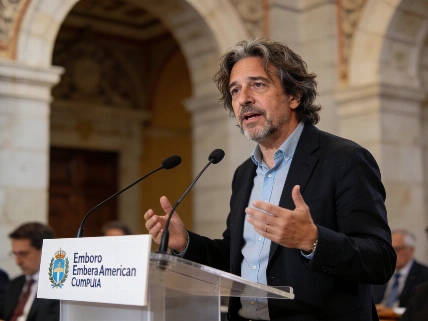
The protest brought together university staff and students. Non-university teachers, on strike since 14 October, also joined the march. The university stoppage involved an estimated 209,000 students and 32,900 workers across the Complutense, Autonomous University of Madrid, Alcalá, Carlos III, Rey Juan Carlos and Polytechnic universities, including about 22,800 teaching staff. At the Education Ministry, demonstrators chanted “¡Ayuso, escucha, la pública está en lucha!” The university platform’s spokesperson, Enma García, warned that mobilisation would grow without talks.
The funding agreement sets a total of €1,420.1 million for the universities in 2027, 14.6% above the previous year, and remains in force until 2031. Its six-year package is reported at €14,790.7 million. But the headline increase comes with limits: the calculation includes money paid by families, while part of the additional funding depends on universities meeting targets. The dispute follows an earlier report on the stoppage and the contested package.
Attendance and teaching figures from the first strike day remain incomplete. The UCM por la Pública platform estimated 95% participation at the Complutense on Wednesday; the university had not published its own figure. Organisers also reported participation of up to 95% at some universities, including the Polytechnic and Autonomous universities. Those were union estimates, not an official tally for the entire university system. At the Rey Juan Carlos University, 66% of classes were suspended, according to the institution.
The funding dispute is already affecting campuses. David Gutiérrez, a 59-year-old biology professor at Rey Juan Carlos University, said his institution was considering a loan. He pointed to restricted heating and a lack of funding for research projects. The university is assessing a possible €40 million loan but has not notified the regional government. Separately, the Polytechnic University reported a €14 million deficit in its previous fiscal year, according to university representative Javier González; the Complutense and Rey Juan Carlos universities have also faced financial difficulties.
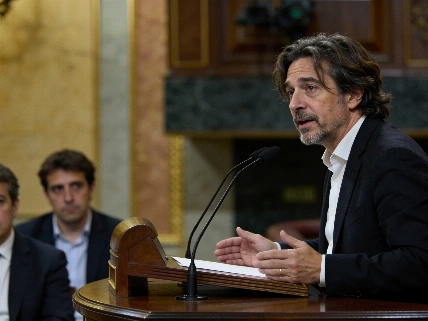
Regional government officials reject the unions’ account of the dispute. Government spokesperson Miguel Ángel García Martín described the university strike as political on Wednesday and said funding was at a historic high. He said the pact had the support of all six university rectors. Ayuso repeated that position in the regional assembly on Thursday. The Socialist Party’s Reyes Maroto accused the People’s Party of seeking to cut and suffocate public education, while Más Madrid’s Manuela Bergerot said the regional government had breached the funding agreement.
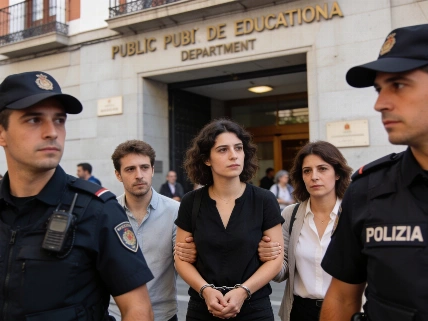
Separately, around 65,000 teachers in early years, primary and secondary education are called to the non-university strike, which affects a system serving more than 666,000 pupils. Their demands include shorter teaching hours and lower class sizes, alongside a €600 monthly pay rise. Menos Lectivas, one of the groups organising the action, said a secondary-school teacher arrested at a separate gathering outside the Education Ministry had been provoked by undercover officers. That account is the platform’s allegation.
The university strike also brought back ‘la uni en la calle’, a movement that began in 2012. Before the march, about 100 Complutense students and teachers held outdoor classes near the Reina Sofía Museum, with eight faculties taking part. Subjects included the climate phenomenon El Niño and living alongside the Iberian wolf.