Isabel Díaz Ayuso’s appearance on Horizonte became a showcase for her sharp rhetoric against Pedro Sánchez and the left, as the interviewers offered little resistance. The result was a monologue that left even her supporters questioning the lack of real scrutiny.
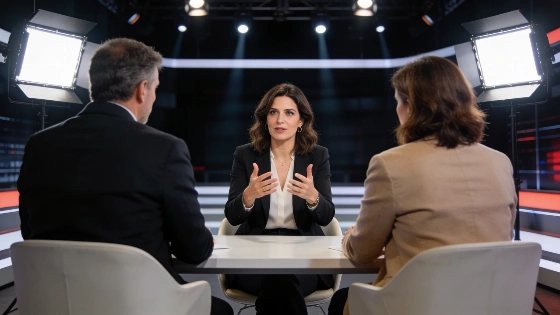
Isabel Díaz Ayuso didn’t wait for the first question: she walked onto the Horizonte set and took over. The Madrid president, always quick on her feet, found herself in a studio that seemed built for her, with dazzling lights and a sharp-looking set, while the questions barely scratched the surface.
What started as a supposed deep-dive interview turned into a stage for Ayuso’s strongest attacks. She called Pedro Sánchez a “dictator.” She said the PSOE clings to power and won’t let go through democratic means. She warned of “revolution” and “mafia,” then invoked “class struggle” in Spain. All of this came out in less than an hour. Hosts Iker Jiménez and Carmen Porter mostly listened as Ayuso delivered her lines with the confidence of someone who knows the cameras are on her.
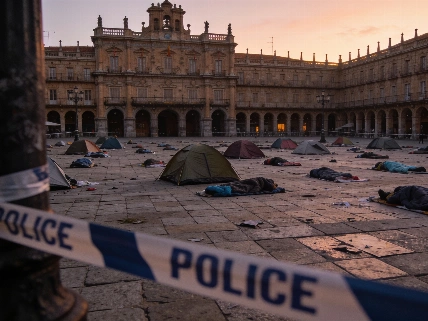
The protest camp in Puerta del Sol was the official reason for her visit. The eviction of 87-year-old Maricarmen Abascal became a flashpoint and a symbol of Spain’s housing crisis. Euronews reported that the camp emerged after the eviction and quickly became a nationwide symbol of the crisis. But the talk didn’t stay on housing for long. Ayuso steered the conversation to her own political story. Her words were bold; the real surprise was the silence that followed. No one asked her to explain why she called Sánchez a “dictator.” No one pressed for proof of a coming revolution. The interviewers let her go, and Ayuso, a natural on TV, took full advantage.
Horizonte is known for asking what others won’t. The show usually digs in. Not this time. When Ayuso said the left refuses to leave power democratically, no one asked her to back it up. When she claimed Sánchez needs Spaniards to “kill each other,” the moment slipped by. The interview turned into a monologue: Ayuso set the pace, and the hosts followed.
One part did touch on the personal toll of politics. Carmen Porter brought up threats and hostile messages sent to Ayuso, including the infamous coffin in Sol. Ayuso widened the focus. “This is about many people,” she said. “About those who believe in Spain.” The housing crisis, the reason she was invited, faded away. The Ayuso versus Sánchez drama took over. Information from earlier reporting, the Sol protest has become a political battleground. Last night, it was just a backdrop.
AFP reported that thousands marched in Madrid and that a camp of dozens to around a hundred tents was established in the city center, with many protesters spending the night in Puerta del Sol. Demonstrators called for stronger tenant protections and a ban on evictions without alternative housing. AP also reported calls for a freeze on rental prices.
When asked about her future, Ayuso stuck to the script. She pointed to Alberto Núñez Feijóo as the Partido Popular’s leader and called Madrid a “basic piece.” She didn’t say yes or no to national ambitions. On leaving politics, she was clear: “Now is when I least think about it. We cannot afford it.” Her answers were polished. Every word was measured.
Reaction came fast, including from Ayuso’s own supporters and Horizonte’s regular viewers. Social media filled with complaints about the soft questions. “I like Ayuso, but that was a massage interview,” one viewer wrote. Another, a fan of the show, missed the tough follow-ups. The criticism wasn’t about Ayuso’s politics; it was about Horizonte dropping its usual edge.
Cuatro, the network behind Horizonte, has seen ratings rise, and the show is a big reason. Its brand is built on fearless questions. That’s why last night felt like a letdown. Ayuso can handle tough exchanges. She thrives on them. This time, she got free rein. For 47 minutes, the set was hers. The show delivered spectacle. Was it journalism? That’s up for debate. When the lights went out, one question remained: Why did Horizonte hold back?