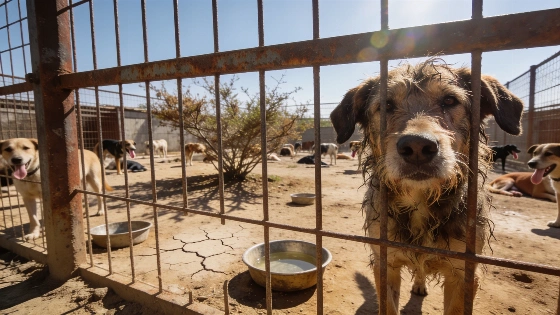
Animal rights groups and political parties have raised alarms over poor conditions at Badajoz’s municipal animal shelter. Reports cite lack of shade, dirty water, and inadequate care. The city council and operator Athisa Medio Ambiente face mounting pressure.
Serious concerns have emerged over the state of the Centro de Protección Animal de Badajoz, as animal welfare groups and several political parties accuse the facility of failing to meet basic standards. The shelter, managed by Athisa Medio Ambiente under a municipal contract since 2024, has come under fire for conditions that reportedly endanger the wellbeing of dogs and other animals, including a Vietnamese pig, especially during the recent heatwave that pushed city temperatures to 43°C.
Key complaints include a lack of shaded areas, water bowls left in direct sunlight, poor water quality, and insufficient cleaning in parts of the facility. Irene de Miguel, spokesperson for Unidas por Extremadura, described the situation as unacceptable and argued that animal protection remains an unresolved issue in the region. She called for a reallocation of some of the more than two million euros currently earmarked for bullfighting in the regional budget—agreed by PP and Vox—towards improving shelters, cat colonies, and animal reception centres.
The criticism has been echoed by Asociación ProAnimal, whose lawyer María José Germán announced plans to file a formal complaint documenting alleged administrative irregularities observed during a recent visit. Germán indicated that if evidence of criminal liability emerges, it will be reported to the relevant authorities.
The PSOE of Badajoz has also questioned the shelter’s operations after the death of an abandoned dog in a residential area. According to the party, a local resident provided water and alerted authorities, but no one responded, and the animal was found dead the next day.
PACMA has taken its concerns to the Guardia Civil’s environmental unit, Seprona. PACMA president Javier Luna described the shelter as precarious and unsanitary, insisting that the city council, as the service owner, must ensure contractual obligations are met. Luna also noted that Athisa Medio Ambiente has faced controversy in other Spanish municipalities in recent years.
Responding to the mounting criticism, María Dolores Vázquez, the city councillor responsible for animal protection, stated that improvements and expansion of the facility are underway, funded by a dedicated budget line this year. She maintained that animals do have access to shaded areas, both from trees and awnings, and argued that images circulating online show only a limited part of the centre. Vázquez added that the animal welfare department and other city offices address requests daily and are working with the contracted company to enhance conditions.
The shelter’s contract with Athisa Medio Ambiente, initially valued at €207,364, was extended after no other companies bid during the latest tender, resulting in a €68,129 budget increase. The contract covers the collection of abandoned animals, veterinary care, and removal of equine carcasses. The city council confirmed that the service is currently operating under an extension while a new tender is prepared. Vázquez acknowledged that a recent parvovirus outbreak has complicated operations, leading to urgent cases being prioritized and some animals transferred to other facilities, including one in Portugal, which has increased administrative workload.
Athisa Medio Ambiente has denied claims by the PSOE that animal collection services were suspended. Fabio Barbero, the company’s director of animal protection centres, told Cadena SER that only certain non-urgent admissions have been temporarily paused as a preventive measure due to high occupancy and a seasonal rise in gastrointestinal illnesses. Barbero stressed that animals posing a safety risk or requiring immediate intervention are still being collected, and that new arrivals are quarantined to prevent disease spread. He said the company is collaborating with the city to improve the shelter.
Allegations of poor hygiene, veterinary malpractice, lack of clean water, and insufficient disinfectants have also surfaced in a campaign launched on Change.org by a former shelter employee. This initiative has added further public pressure for reforms at the Badajoz facility.
Animal welfare in Spain has become a more prominent issue in recent years, with several regions updating their regulations and increasing oversight of municipal shelters. The situation in Badajoz highlights ongoing challenges in ensuring consistent standards across the country. In other parts of Spain, local authorities have faced emergencies requiring rapid response, such as the evacuation of buildings in Barcelona following a major sinkhole, underscoring the importance of effective municipal services in safeguarding both residents and animals.