A baker in Badajoz continued working with a body hidden in his shop. Family suspicions and persistent investigation led to the discovery of David Salazar's remains. The case has shaken the local community and raised questions about police response.
The disappearance and subsequent murder of David Salazar, 33, in Badajoz has exposed a chilling sequence of events in the Suerte de Saavedra neighborhood. Salazar was last seen heading to a local panadería on a Sunday afternoon, intending to collect a debt. Within days, his family’s suspicions and their own investigation played a crucial role in uncovering the truth behind his fate.
Relatives grew alarmed when Salazar failed to make contact for over 24 hours, an unusual absence for someone described as attentive and protective. Their focus quickly turned to Juan Francisco Moyano, known locally as Juanfran, the 49-year-old baker who owed Salazar money. Early Tuesday morning, Salazar’s cousin Andrés confronted Juanfran at his shop, noticing suspicious cleaning products and what appeared to be a bloodstain in the baker’s car. Despite direct accusations, Juanfran denied any involvement and continued serving customers, even as Salazar’s body lay hidden in the back room.
Family members, including Salazar’s father and brother-in-law, pressed for answers, searching the bakery and sharing their findings with police. They provided security footage showing Salazar entering the bakery but never leaving, and reported the suspicious stain in Juanfran’s vehicle. Despite these leads, authorities did not detain the baker immediately, a delay that added to the family’s distress.
According to the investigation, Juanfran later confessed to killing and dismembering Salazar after a heated argument over a debt. He claimed financial desperation and mounting pressure led to the fatal confrontation. After the incident, he attempted to conceal the crime by cleaning the premises and hiding the remains in freezers before disposing of them near a forest track close to the bakery. Throughout this period, he maintained his routine, interacting with Salazar’s family and customers as if nothing had happened.
The case escalated further when rumors spread that police would return Juanfran to the bakery, prompting unrest in the neighborhood. Officers conducting a standard inspection faced hostility, resulting in injuries and an arrest for attacking law enforcement. Juanfran remains in pre-trial detention, facing homicide charges, while the family’s legal team seeks to have the case classified as murder.
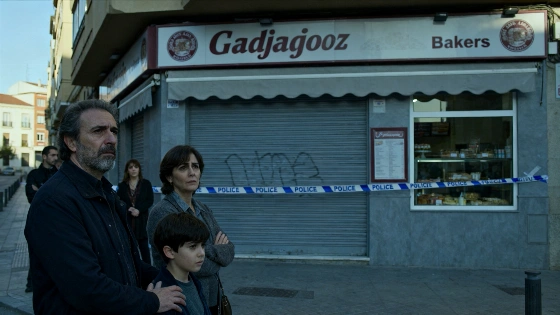
Badajoz, located near the Portuguese border, has seen heightened attention to local crime and police procedures following this incident. The Suerte de Saavedra area, sometimes referred to as Las Malvinas, is known for its dense population and social challenges. In Spain, homicide investigations typically involve detailed forensic work and community cooperation, but this case highlights the critical role families can play when official action lags. The bakery, once a neighborhood fixture, now stands closed, its facade repainted to cover graffiti left in the wake of the tragedy.