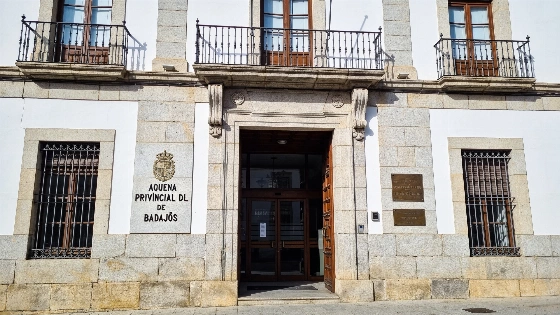
David Sánchez, brother of Spain’s Prime Minister, has been barred from public office for nine years. The Badajoz court found him guilty of misconduct in a high-profile hiring case. Several officials received similar penalties.
The Provincial Court of Badajoz has handed down a nine-year ban from public office to David Sánchez Pérez Castejón, the brother of Spain’s Prime Minister, after finding him guilty of misconduct in the controversial creation and modification of a public position at the Diputación de Badajoz. The ruling, which also affects former provincial president Miguel Ángel Gallardo and several other officials, marks a significant moment in the ongoing debate over nepotism and public sector ethics in Spain.
The court determined that the position of Coordinator of Conservatory Activities was created specifically for David Sánchez, with no demonstrated necessity or urgency. According to the judges, the role was designed to serve the personal interests of Sánchez, who at the time lacked stable employment, rather than the needs of the public administration. Miguel Ángel Gallardo, then head of the Diputación, was found responsible for orchestrating the creation of the post to benefit Sánchez, though the court noted it could not establish whether the initiative came directly from Sánchez or his associates, or was a unilateral decision by Gallardo to favor the Prime Minister’s brother.
In addition to Sánchez and Gallardo, Luis Carrero—described as a close friend and collaborator of Sánchez—received the same nine-year disqualification for his own appointment to a newly created position. The court also imposed bans on eight other civil servants involved in the hiring process. Gallardo faces a total of 18 years of ineligibility due to two separate counts of misconduct.
The ruling details three main episodes: the initial creation of the coordinator role for Sánchez, the subsequent modification of the job’s conditions to suit his preferences—including removing incompatibility clauses—and the establishment of a new position for Carrero, who had previously worked with Sánchez on operatic projects. Internal communications reportedly referred to Sánchez as the “hermanísimo,” underscoring the perception of favoritism within the institution.
While several popular accusations, including those from PP, Vox, Hazte Oír, Iustitia Europa, Liberum, and Abogados Cristianos, had sought prison sentences of up to six years for Sánchez, the court ultimately dismissed the charge of influence peddling. The judges concluded that there was insufficient evidence to prove direct pressure or influence on those responsible for the appointments, stating that any such hypothesis lacked factual support and could not be substantiated by the evidence presented.
The verdict includes a pointed reflection on the dangers of nepotism, warning that favoritism towards relatives or friends undermines the principles of equality, merit, and capability that should govern public employment. The court emphasized that such practices erode democratic health, foster corruption, and reduce efficiency in public administration, insisting that the general interest must always take precedence over individual benefit in the creation of public sector roles.
The decision is not final and may be appealed to the Superior Court of Justice of Extremadura and, if necessary, to the Supreme Court. The ruling was signed by magistrates José Antonio Patrocinio, Emilio Serrano, and María Dolores Fernández.
This case comes amid heightened scrutiny of public sector appointments and the broader issue of political favoritism in Spain. Recent debates over the impact of new nationality laws and the handling of corruption cases have intensified, as highlighted in discussions about the growing number of new Spanish citizens and their potential influence on future elections. For example, concerns about the intersection of legal reforms and political dynamics were recently explored in an analysis of census changes and corruption debates, as seen in this report on regional legal pressures and court workloads.
In the context of Spanish law, prevaricación—misconduct by public officials—remains a serious offense, often resulting in lengthy bans from holding public office. The Sánchez case underscores the judiciary’s willingness to address abuses of power, even when high-profile political families are involved. The outcome may influence future hiring practices and reinforce calls for greater transparency and accountability in public administration across Spain.