

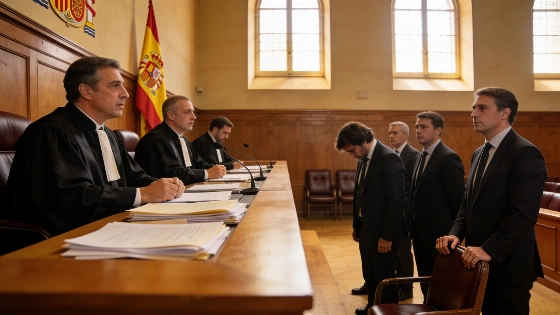
Eleven officials from the Diputación de Badajoz, including career civil servants, have been barred from public office for up to 18 years. The convictions, linked to the hiring of the Prime Minister’s brother, have triggered appeals and political tension.
Eleven current and former officials from the Diputación de Badajoz, including the brother of Spain’s Prime Minister, David Sánchez Pérez-Castejón, and ex-president Miguel Ángel Gallardo, have been sentenced to lengthy bans from holding public office. The court found them guilty of administrative misconduct for creating a public job allegedly tailored for Sánchez’s brother. As a result, those convicted, some of whom are career civil servants, are now prohibited from working in public administration or standing for election for periods ranging from nine to eighteen years.
The ruling, issued by the Audiencia de Badajoz, concluded that the officials either directly participated in or facilitated the creation of a “superfluous and contentless public position” within the provincial institution. The court determined that the role was designed specifically for the Prime Minister’s brother, a finding that led to the severe penalties. The convicted parties have announced plans to appeal the decision, first to the Tribunal Superior de Justicia de Extremadura and, if necessary, to the Supreme Court. Legal representatives for Miguel Ángel Gallardo maintain that no crime was committed and argue that any period of disqualification would be excessive.
On the prosecution side, the lawyer representing Manos Limpias, José Manuel Bueno, welcomed the verdict, describing it as confirmation of a “corruption scheme” and vowing to continue efforts to recover public funds allegedly paid to David Sánchez. However, the court dismissed charges of influence peddling and rejected requests for prison sentences from private prosecutors.
The Diputación de Badajoz responded to the verdict by reiterating its respect for the judicial process and affirming its ongoing cooperation with the courts. In a public statement, the institution emphasized its commitment to the rule of law and noted its full collaboration throughout the investigation.
The political repercussions have been immediate. The Junta de Extremadura called on Prime Minister Pedro Sánchez to call elections, arguing that the verdict leaves him surrounded by convicted individuals in both his political and family circles. Abel Bautista, the region’s vice president, criticized previous attempts by socialist leaders to question the judiciary’s motives and insisted that the ruling strengthens public trust in the justice system, despite what he described as pressure during the investigation.
Political parties across Extremadura have weighed in. The regional PSOE secretary, Álvaro Sánchez Cotrina, expressed respect for the court’s decision and announced that the party would apply its internal statutes to those affected. He acknowledged the personal impact on colleagues but noted that the verdict did not establish their innocence, expressing hope that future appeals might overturn the convictions. The Partido Popular’s parliamentary spokesperson, José Ángel Sánchez, argued that the ruling confirms misuse of the provincial institution for personal benefit and demanded an apology from the PSOE. Vox, meanwhile, lamented the renewed focus on Extremadura due to corruption, while Unidas por Extremadura supported the disqualification sentences as a proportionate response to entrenched clientelism in the region.
Spain’s legal system allows for multiple levels of appeal in administrative misconduct cases, often resulting in lengthy judicial processes. The case has drawn national attention due to the involvement of the Prime Minister’s family and the scale of the penalties. Administrative disqualification in Spain prevents individuals from holding any public office or employment, and can have lasting effects on political careers and public sector staffing. The outcome of the appeals process will be closely watched, as it may set precedents for future cases involving alleged favoritism or irregular hiring in public institutions.



