Catalan Authorities Launch Major Investments in Roads and Metro. The Catalan government has announced the launch of a major investment program in transport and roads. Over the next six years, key projects are planned to be implemented with the help of private partners. The decision affects the metro, highways, and new transportation hubs.
A new phase in the development of transport infrastructure has begun in Barcelona: the Catalan government has announced the launch of an investment program totaling €3.3 billion. According to President Salvador Illa, the funds will be allocated for the accelerated construction of strategic facilities, including the completion of the central section of Metro Line 9 and large-scale modernization of highways. For the first time in recent years, the region is returning to a public-private partnership model, which, according to Illa, has been frozen since 2010.
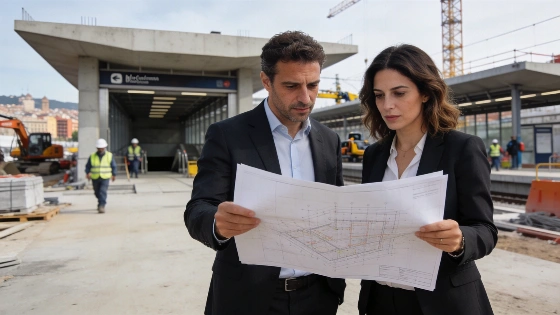
As part of the first wave, tenders have already been announced for projects with a combined value of €1.8 billion. These include the completion of the central segment of Metro L9 (€500 million), expansion of 366 km of roads by introducing 2+1 lanes (€720 million), as well as the reconstruction of the Berga-Bagà section (€470 million). Another €1.5 billion is planned for further development: this includes the expansion of the C-55 highway, the second phase of the tram line between Tarragona and Reus, the creation of new bus interchange hubs, and the construction of a railway terminal in Lleida.
Illa estimates that the new scheme will make it possible to complete key projects within six years, whereas previously this could have taken up to two decades. Authorities emphasize that the acceleration of work became possible after reaching budget agreements with ERC and Comuns. Another major development for the region was the approval by Starlux Airlines of a direct flight between Barcelona and Taipei, scheduled to launch in early 2027.
In his address, Illa emphasized that the priority remains bringing major companies back to the region, unblocking infrastructure projects, and moving towards cooperation with the central government. He recalled the launch of the investment consortium, which is expected to accelerate the implementation of projects overseen by Madrid. Catalonia is already carrying out an investment program totaling 20 billion euros, and the authorities hope the new model will help remove some bureaucratic obstacles.
During the discussion, Illa also touched upon the topic of education, highlighting the importance of the agreement reached with teachers and the need to improve the quality of school education. He noted that many leaders he met during his recent trip to California received their education in Catalonia's public schools.
The context for these new decisions also includes the experience of other Spanish regions, where issues of traffic restrictions and infrastructure modernization are the subject of heated debate. For example, the authorities in Torrelavega recently changed the procedure for issuing fines for entering restricted traffic zones to protect drivers' rights — you can read more about this in the article on the new rules in Torrelavega.
For reference: Line 9 of the Barcelona metro is one of the largest and longest-running projects in the region, while the C-55 route plays a key role in connecting the central and southern parts of Catalonia. The introduction of a public-private partnership model could serve as an example for other autonomous communities, where infrastructure projects often face delays due to complex approval procedures and lack of funding.