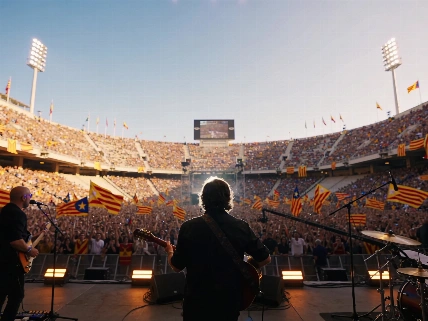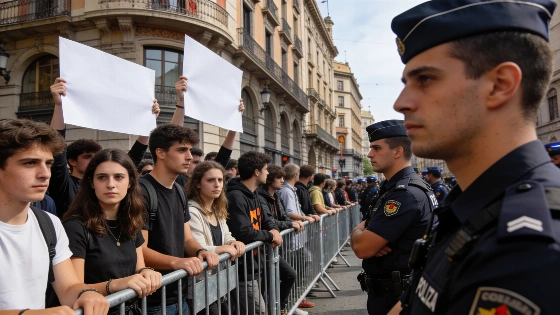
Barcelona faces controversy as the ultra-right Save Europe Act plans a march. City officials and anti-fascist groups demand action. Police are preparing to prevent clashes and maintain order.
Barcelona’s city government and several anti-fascist organizations have openly opposed the planned Save Europe Act demonstration, scheduled for this Saturday in the city. The movement, known for its ultra-right and xenophobic positions, has drawn criticism from local authorities who argue that such events threaten social cohesion and democratic values. Deputy Mayor Laia Bonet stated that the protest is not welcome in Barcelona, emphasizing the city’s refusal to host gatherings that promote racism, xenophobia, or undermine democratic coexistence.
Despite calls from political groups such as Comuns and ERC to ban the march, the responsibility for such a decision lies with the regional government, which has not intervened. In response, the Mossos d’Esquadra and the Guardia Urbana have coordinated a security operation to prevent incidents and ensure that the Save Europe Act rally does not intersect with a counter-demonstration organized by anti-fascist groups in Plaça de Sant Jaume. The counter-protest is set to begin an hour before the ultra-right event, raising concerns about possible confrontations.
The Save Europe Act, which promotes white supremacist rhetoric and opposes immigration, is currently touring European cities, with events planned in both Barcelona and Madrid. The movement has received support from Vox and seeks to pressure the European Union to defend what it calls the “ethnic continuity” of native European populations. Organizers claim to represent those who feel marginalized in their ancestral lands due to immigration policies.
Gerardo Pisarello, the Comuns candidate for mayor, was among the first to warn about the rally, describing it as an example of “international Trumpism” converging in Barcelona. He urged both the Generalitat and the city council to use all available legal tools to prevent the event and keep racist hate off the streets. Pisarello also challenged Mayor Collboni to prove his commitment to making Barcelona a stronghold against the far right.
Barcelona En Comú plans to file a formal complaint with the city’s Office for Non-Discrimination, requesting an investigation into whether the demonstration violates Article 43.6d) of the Catalan equality law. This article classifies public events that incite discrimination, intolerance, or violence as serious offenses. The group is also considering requesting precautionary measures and has cited previous actions, such as the 2022 ban on the Hazte Oír bus for anti-trans messages, which resulted in a significant fine from the Generalitat.
Discussions between Comuns and the Interior Ministry are ongoing to determine the legal options available. Deputy Andrés García Berrio has pointed out that the law allows for fines ranging from €40,000 to €50,000 and the possibility of immediate measures. He questioned why no sanctioning process has yet been initiated against the organizers.
Esquerra has also pressed the city council not to authorize the rally, arguing that the PSC, which governs both Barcelona and Catalonia, has the power to prevent it. The CUP criticized the city for including the event in its official agenda, claiming this gives undue visibility and legitimacy to the far right.
Public demonstrations by far-right groups have become a recurring issue in Spain’s major cities, often sparking counter-mobilizations and debates over freedom of assembly versus the need to protect vulnerable communities. The situation in Barcelona echoes previous tensions seen during large-scale protests, such as the coordinated Diada demonstration by Catalan pro-independence groups, which also required significant police planning and political negotiation. For more on how mass mobilizations have shaped the city’s recent history, see this analysis of joint pro-independence actions in Barcelona.
Spain’s legal framework allows authorities to restrict or sanction public events that incite hatred or discrimination, but the threshold for intervention remains a subject of political debate. The outcome of the Save Europe Act rally and the city’s response may set a precedent for how similar cases are handled in the future, especially as tensions over migration and identity continue to influence public discourse across Europe.