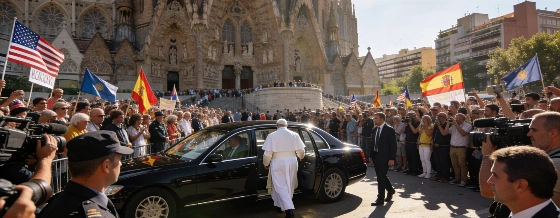
Pope Leo XIV's Visit to Spain Intensifies Antagonism with the USA. Pope Leo XIV is preparing for his visit to Spain, set against the backdrop of sharp criticism toward Donald Trump's policies. His stance is drawing attention not only from Catholics but also from the broader public.
Pope Leon XIV will visit Spain in early June with a stop in Barcelona. This event is drawing attention not only from religious communities, but also from the general public, as the head of the Catholic Church has become a prominent figure in the international dispute with Donald Trump. In recent months, Leon XIV has repeatedly spoken about the risks associated with the former US president's policies, which has heightened interest in his stance and upcoming trip.
Unlike his predecessor, Pope Francis, who openly criticized Trump for his isolationist policies and building walls, Leon XIV acts more discreetly but no less consistently. His criticism is based on his personal experience as a US citizen and observations of internal developments in American society. According to the pope, the rise of authoritarian trends and the concentration of power in the hands of a few threaten not only the US but also international stability.
Particular attention is drawn to the fact that Leon XIV is often referred to both by his civil name, Robert Prevost, and his ecclesiastical title. This highlights his dual identity and lends additional weight to his statements regarding the situation in the US. At the same time, his style differs from Francis's directness—he prefers more nuanced formulations, which makes his remarks a topic of discussion not only among believers.
The Pope's visit to Spain takes place against the backdrop of ongoing tensions between the Vatican and Washington. Donald Trump previously reacted sharply to criticism from the Church, stating that he did not want the Pope interfering in American politics. Afterwards, a photo surfaced online—quickly deleted—showing Trump depicted as Jesus Christ, which sparked a new wave of discussion.
According to RUSSPAIN, such conflicts between religious and political leaders are not uncommon in modern Europe. For example, press access rules were recently tightened in Madrid after a scandal involving far-right journalists, which also reflected growing polarization in society (more on measures in the Spanish Congress).
It is expected that during Leon XIV’s visit to Spain, issues of American politics will not be officially included on the agenda; however, it is possible that they might be discussed in closed meetings with government representatives. In Catholic circles, the Pope maintains high authority, allowing him to speak openly about global threats related to the rise of populism and societal fragmentation.
For reference: Leon XIV became the first American pope, which lends special significance to his statements against the backdrop of the internal crisis in the United States. His visit to Barcelona may become not only a religious, but also a political event, reflecting profound changes in the relationship between the Vatican and world leaders. In recent years, the influence of the US on the international stage has been tested, while Europe faces new challenges related to the rise of radical movements and a shift in the balance of power.