Catalonia’s PISA results were thrown out after a major testing error. Education officials insist local assessments are enough, but the OCDE’s decision leaves Catalonia without international comparison.
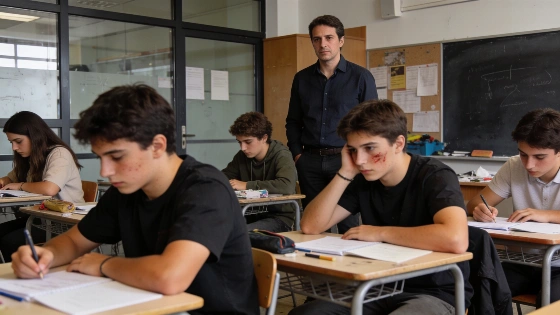
Catalonia has been removed from the latest PISA rankings after the OCDE ruled its results invalid due to a major breach in testing rules. More than 23% of students were left out of the assessment—almost five times the allowed limit—making the region’s scores unusable for comparison. Most of the excluded students had learning difficulties or lacked language skills, which means Catalonia’s reported gains in science and reading can’t be trusted.
The Catalan Department of Education is still looking into how such a large error happened during student selection for the 2025 PISA tests. Despite the setback, regional officials have played down the consequences, saying Catalonia already has enough data from its own diagnostic exams and those run by the central government. They argue these local assessments are enough to judge the region’s education system, even though the OCDE’s decision leaves Catalonia out of international comparisons for this cycle.
The OCDE reported that Catalonia’s exclusion rate reached 23.2%, far above the 5% maximum and even higher than Murcia’s 12.7%. Murcia’s results were kept but flagged with a warning, while Catalonia’s were left out of the main OCDE report and only appear in Spanish data tables with a disclaimer. The agency made it clear: these figures can’t be used to compare Catalonia with other regions or previous years.
If the altered sample had been accepted, Catalonia would have scored 502 points in science—well above the Spanish average of 477 and the OCDE average of 482. In reading, the region would have reached 473, again higher than both national and international averages. But these numbers are meaningless, since the sample was skewed by removing weaker students. In math, Catalonia’s 474 points were only slightly above its previous results, hinting that a valid sample might have shown a drop.
PISA tests are held every three years for 15-year-olds in 91 countries and are widely seen as the main international benchmark for education. In Spain, about 30,000 students from 1,000 schools took part, with Catalonia using an expanded sample from 51 schools. The 2025 edition focused on science but also tested reading and math. Despite the resources spent, Catalonia’s results have been discarded, and the regional evaluation agency says it won’t publish its usual detailed report. Raw data will be available for analysts, but there will be no official interpretation.
Catalan education authorities say that upcoming results from the Generalitat’s own diagnostic tests, as well as future international studies like PIRLS and TIMSS, will make up for the loss of PISA data. This approach is similar to other regional policy disputes, such as Catalonia’s conditional stance on migrant child support reported earlier, where local control is prioritized over outside benchmarks.
The OCDE’s decision to exclude Catalonia from PISA is more than a technical issue—it removes the region’s ability to compare itself with Spain and the rest of the world. While local officials claim internal assessments are enough, the lack of internationally recognized data weakens both transparency and accountability. This episode highlights a reluctance within Catalonia’s education administration to face uncomfortable facts, relying instead on self-produced metrics. The OCDE’s message is clear: without strict standards, local data cannot replace real international comparisons.