Catalonia will help with the reception of migrant minors from Ceuta but only within strict boundaries. Salvador Illa rejects unconditional solidarity and criticizes Madrid’s approach to regional funding and social policy.
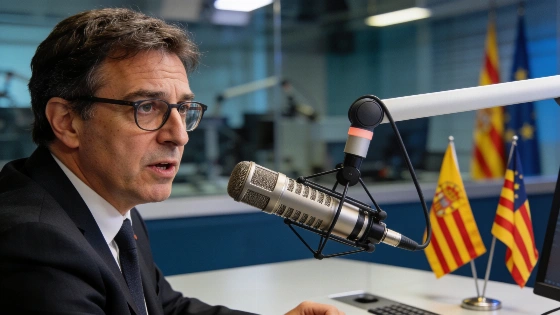
Catalonia’s president, Salvador Illa, has made his position clear: the region will help receive migrant minors from Ceuta, but only as long as it does not come at the expense of local needs. In a recent radio interview, Illa moved away from open-ended solidarity, opting for a more cautious approach as the migration crisis grows.
"Help, as much as we can give," Illa said, stressing that Catalonia’s support has limits. He argued that solidarity should not leave the region worse off than those it is helping. This comes as the Spanish government faces pressure to redistribute unaccompanied minors arriving in Ceuta, a move that has sparked debate among Spain’s autonomous communities.
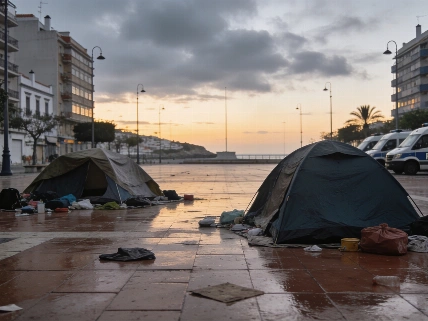
In May 2021, more than 8,000 migrants, including around 1,500 unaccompanied minors, crossed from Morocco into Ceuta in just 48 hours, creating an unprecedented humanitarian challenge for Spanish authorities.
Illa also defended Prime Minister Pedro Sánchez, dismissing criticism of Sánchez’s handling of the crisis and his decision to remain on holiday. According to Illa, Sánchez was "always connected," and opposition attacks were just political theater.
He then responded to Isabel Díaz Ayuso, president of the Community of Madrid, after she accused Catalonia of running "chiringuitos" and expecting Madrid to pay for its "fiestas." Illa pushed back, telling Ayuso not to lecture Catalonia and insisting that the region’s prosperity comes from work, not handouts. He contrasted Catalonia’s approach to public services with what he described as Madrid’s focus on accumulation, which he said leaves many people behind.
According to Spain’s Ministry of Inclusion, Social Security and Migration, the number of unaccompanied migrant minors under state care nationwide exceeded 13,000 in 2023, with Andalusia, Catalonia, and Madrid among the regions hosting the largest numbers. The government has repeatedly called for a more equitable distribution of responsibility among autonomous communities, but regional leaders remain divided on the issue.
At home, Illa called for a "pause" in the teachers’ strike that could disrupt the start of the school year. He said the right to strike should be balanced with students’ right to education and mobility. Illa pointed to recent pay increases for teachers, noting that Catalan educators are now among the best paid in Spain since his administration took office.
Housing policy is another point of tension. Illa promised to adapt Catalonia’s law to limit speculative property purchases, following legal challenges over private property rights. He said new measures would be legally solid and close loopholes that let investors avoid restrictions. "Housing is not for speculation or getting rich," he said, promising changes in the coming months.
On security, Illa defended Catalonia’s record as a "safe country" but said more work is needed. He mentioned plans to expand the Mossos d’Esquadra police force and judicial resources, and said recent incidents involving minors under supervision could lead to a review of child protection policies, though he warned against rushing decisions.
Amid these domestic issues, Illa reaffirmed his support for the full application of the amnesty law and said he hopes former president Carles Puigdemont can return to Catalonia before Christmas. He said he would be willing to meet Puigdemont at the Palau de la Generalitat, recognizing him as both a former president and leader of the opposition.
The tension between regional solidarity and self-preservation is not unique to Catalonia. Across Spain, disputes over funding, migration, and public services are growing. The recent closure of Barcelona’s García Márquez Library due to a staff strike, as reported earlier, shows the wider unrest affecting essential services in the region.
Illa’s approach signals a shift in Catalonia’s role within Spain. By setting clear limits on solidarity, he is telling both Madrid and Brussels that regional cooperation will be conditional. This may appeal to voters who are wary of open-ended commitments, but it could also increase tensions with other regions and the central government. As the migration crisis and social tensions continue, Illa’s balancing act between pragmatism and principle will shape both his leadership and Catalonia’s relationship with the rest of Spain.