A year after Montse Aguilar died during a heatwave in Barcelona, her family still awaits the final autopsy. The judicial process remains frozen, and the city has not recognized her death as a workplace accident.
The family of Montse Aguilar, a Barcelona street cleaner who died after working in extreme heat, continues to face a lack of answers from authorities. One year after her death, the judicial investigation remains at a standstill, with the final autopsy report still pending. The absence of this key document has halted the criminal proceedings, leaving the family in a prolonged state of uncertainty and frustration.
Montse Aguilar collapsed after a shift spent cleaning the streets of the Gothic Quarter during a period of high temperatures. Her relatives maintain that she suffered a fatal heatstroke while on duty, but the official cause of death cannot be confirmed until the autopsy is completed. According to the family’s lawyer, the court cannot proceed without this forensic evidence, making it impossible to assign responsibility or move forward with the case.
Despite repeated requests, the Ayuntamiento de Barcelona has not classified Aguilar’s death as a workplace accident. This position has added to the family’s distress, as they believe the working conditions and lack of adequate response contributed directly to her death. The deceased, who had no children and had worked for Fomento de Construcciones y Contratas (FCC) for three years, had complained of chest pain and intense heat in the days leading up to the incident. On the day she died, she reported her symptoms to her supervisor, who, according to the family, advised her only to drink water instead of activating the safety protocol or calling for medical help.
Medical observations shared by the family indicate that Aguilar’s heart weighed 546 grams—significantly above the typical range for a woman of her age. She had also suffered a fall at home, resulting in a head injury, and had previously reported pain in her chest and neck. However, without the autopsy, these findings remain inconclusive in determining the exact cause of death.
The family’s frustration was evident during a recent conciliation meeting with FCC, where company representatives denied that heatstroke was the cause. The relatives insist that the extreme temperatures played a decisive role, but they are still waiting for official confirmation. Administrative issues have compounded their ordeal: they report that Aguilar was removed from Social Security records a day before her death, and it took three months to receive her final salary payments.
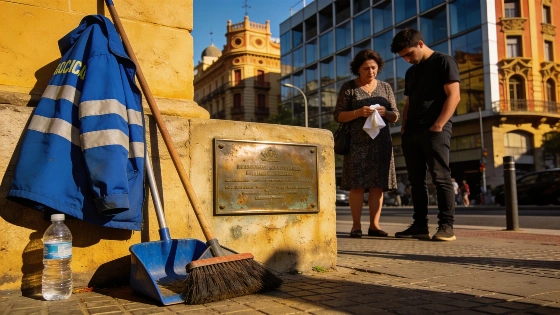
Beyond seeking justice for Montse Aguilar, her family hopes to prevent similar tragedies among municipal workers. They have called on city officials to experience the working conditions firsthand, especially during periods of intense heat. In the Gothic Quarter, neighbors have installed a plaque in her memory, marking the spot where she died and highlighting the dangers of heat exposure for outdoor workers.
This case echoes broader concerns about the impact of extreme weather on vulnerable workers in Spain. In recent years, heatwaves have led to increased scrutiny of workplace safety protocols, particularly for those in outdoor and manual labor roles. The lack of timely forensic and administrative responses in Aguilar’s case has drawn attention to systemic gaps in protecting employees during periods of high risk. For context, similar issues of public safety and administrative response have been highlighted in other incidents, such as the mass evacuations during the Madrid wildfires triggered by extreme weather conditions.
As Spain continues to experience hotter summers, the unresolved case of Montse Aguilar underscores the urgent need for clear protocols and faster investigations when workplace deaths occur under hazardous conditions. The family’s ongoing wait for answers reflects a wider challenge for authorities and employers in adapting to the realities of climate-related risks in the labor market.