Ángel Gabilondo has asked the Constitutional Court to intervene before the 29 November election. The restriction affects Spaniards on the overseas electoral register, while naturalised citizens living in Spain can still vote.
The 29 November general election is approaching, but a dispute over the overseas electoral register remains unresolved.
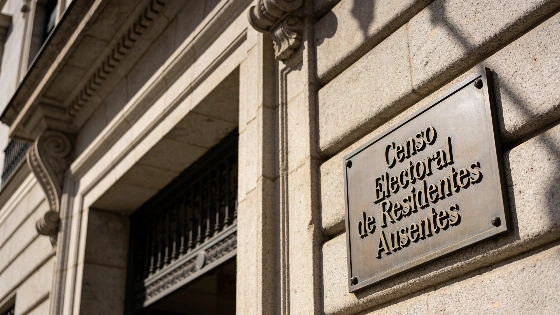
Government figures put the number of affected Spaniards at 163,020. They acquired nationality under the grandchildren law, but the restriction applies only to voters registered abroad in the CERA, Spain’s register of residents living overseas. That figure does not represent all Spaniards living outside the country. Defender of the People Ángel Gabilondo has asked the Constitutional Court for urgent interim measures after the Supreme Court upheld the restriction for the election.
The measure reaches people who have not yet been entered in the CERA, as well as those already registered whose registration has no electoral effect while the restriction remains in force. In practice, voters need explicit consular confirmation that their ancestor was recognised as a political exile before they can vote.
The dispute stems from Spain’s Democratic Memory Law, which expanded access to citizenship for descendants of Spaniards, including people whose ancestors were forced to leave the country. Applications require administrative and consular checks of ancestry and the circumstances of emigration or exile. The restriction does not revoke citizenship; it affects the electoral consequences of registration in the CERA.
Gabilondo filed an amparo appeal on 16 October. He acted after receiving requests from individuals and organisations, and reviewing the Supreme Court’s decision of 12 October. He also asked the Constitutional Court to suspend the ruling temporarily while it considers the case, and to address the Supreme Court’s interpretation of the suspension of the fundamental right to vote. As of 16 October, the Constitutional Court had not ruled on the urgent request.
The Supreme Court’s Chamber for Administrative Litigation voted five to one on 12 October to maintain the measure, first adopted on 10 September. It rejected requests from the State Attorney’s Office to lift the restriction. The majority said the right to vote is not “de carácter absoluto” and must be weighed against “intereses generales”. It cited the need to protect the accuracy of the electoral register and prevent irregularities, putting those public interests ahead of the individual voter’s interest. El Confidencial reported that the ruling affects 163,020 people naturalised under the grandchildren law.
Judge María Alicia Millán Herradías dissented. She argued the court should have assessed whether the measure remained proportionate after the election had been officially called. The affected people, she noted, hold Spanish citizenship and may be registered in the CERA.
The State Attorney’s Office and the Public Prosecutor’s Office had asked the Supreme Court to reverse the suspension, arguing there was not enough time to revise the overseas register before the election. The court said the administration could not rely on its own inability to comply with a judicial order when that inability stemmed from the administration itself.
The Council General of Spanish Citizens Abroad, or CGCEE, represents more than three million Spaniards living abroad. It had urged Gabilondo to appeal, invoking the constitutional guarantee of equality under Article 14 and the right to take part in public affairs through elected representatives under Article 23.1. The council also criticised the five-working-day period for potential applicants to join the Supreme Court proceedings through a lawyer and procurator. It said the deadline was difficult to reconcile with effective legal protection and asked for the measures to be suspended for the 29 November election.
RUSSPAIN previously covered the early election call. This case concerns eligibility for the 29 November vote. The Supreme Court issued its decision shortly before the relevant electoral register was due to close, leaving little time for administrative changes before polling day.
Those affected can also submit arguments to the Supreme Court through a lawyer and procurator. The court allowed five working days from publication of its order in the BOE on 15 October. The deadline fell on the following Friday. Spain’s Argentina-based Centro de Descendientes de Españoles Unidos, or Cedeu, had already joined the case before the Supreme Court on Thursday.