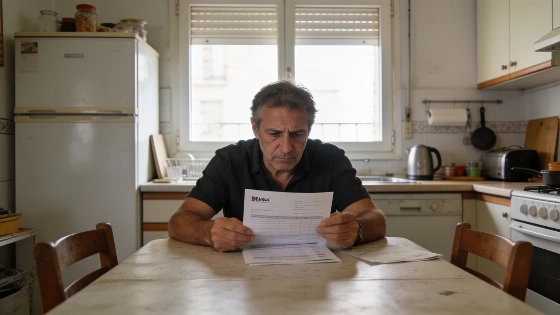
A Barcelona court has ruled that the Catalan Tax Agency must return funds seized from a man whose income was below the minimum wage. The decision highlights legal protections for vulnerable residents. Interest will be paid on the refunded amounts.
The Audiencia de Barcelona has ruled that the Catalan Tax Agency must reimburse a man after seizing funds from his bank account, despite his income falling below the legal minimum wage threshold. The court found that the agency's actions violated protections for individuals whose sole income is less than the salario mínimo interprofesional (SMI), currently set at €1,166.67 per month.
The case centers on two embargoes carried out in 2022, when the agency withdrew €579.70 and €860.70 from the man's account to cover administrative penalties. The affected individual, who relies on a permanent disability pension of €975.61 per month, argued that the withdrawals left him unable to pay for basic needs, including food and essential bills.
Judges determined that, under both the Ley de Enjuiciamiento Civil and the Ley General Tributaria, income below the SMI is protected from embargo. The court rejected the agency's argument that the legal challenge was premature, noting that the man had not been properly informed about administrative deadlines. The ruling emphasized that denying the appeal would effectively reward administrative errors by the authorities.
While the court declined to award additional compensation for damages caused by the embargoes, it ordered the full return of the seized amounts with interest for late payment. The Catalan Tax Agency retains the right to appeal the decision.
This case highlights the importance of legal safeguards for vulnerable residents in Spain, especially those dependent on social benefits or disability pensions. The SMI serves as a critical benchmark for protecting low-income individuals from aggressive debt collection or administrative sanctions. Similar legal disputes have arisen in other regions, reflecting ongoing tensions between tax authorities and citizens over enforcement practices. In a related context, local government actions and legal oversight have also come under scrutiny, as seen when Almería prosecutors investigated councilors for procedural delays in a high-profile case.
Spain's legal framework provides that only income above the SMI can be subject to embargo, with a progressive scale applied to higher earnings. This protection is designed to ensure that basic living standards are not compromised by administrative or judicial actions. The outcome of this case may prompt further review of enforcement procedures by regional tax agencies and reinforce the necessity for clear communication with affected individuals.