A family living in Barcelona for 22 years was evicted after the anti-eviction moratorium ended. Social services had recognized their vulnerability. The property is now shifting to tourist and short-term rentals.
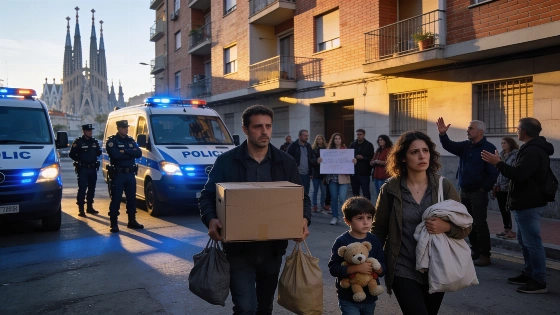
In Barcelona, a family who had lived for over two decades in the same apartment was evicted on Friday morning, following the expiration of Spain’s anti-eviction moratorium. The measure, which had shielded vulnerable households since the pandemic, was not renewed after a parliamentary vote, opening the way for pending evictions to proceed. Despite the presence of social services documentation confirming the family's vulnerable status, the judicial commission, supported by a significant police deployment, carried out the eviction at 10:30 a.m. on Marina Street.
The family, led by Jordi Galí, had resided at number 124 since 2004, renewing their rental contracts annually. Financial difficulties began when Jordi’s wife lost her job due to a recurring illness during the pandemic, leading to unpaid rent and eventual legal proceedings. The eviction had been on hold for years under the government’s social shield, but was reactivated as soon as the moratorium lapsed. Local tenant advocates, including the Sindicato de Inquilinas, warned that this case is part of a broader trend, with thousands of similar evictions now possible across Spain.
On the day of the eviction, dozens of neighbors and activists gathered outside the building in an attempt to prevent the family’s removal, but were unable to stop the process. The property, now owned by Urban Power, has seen a shift in use: at least five apartments in the building have been converted to licensed tourist rentals, while the remaining units are offered for short-term leases. Residents and local groups have voiced concern that the transformation of residential buildings into tourist accommodations is eroding the social fabric of neighborhoods and reducing access to stable housing for local families.
After the eviction, the family was given only a few minutes to collect their belongings. For now, they are relying on temporary shelter from friends, while their youngest son is staying with acquaintances. The lack of mediation between the property owner and the tenants before the eviction has also been criticized by tenant organizations. Neighbors recall how the area has gradually lost its community atmosphere as more apartments have shifted to tourist use.
Spain’s anti-eviction moratorium was introduced in 2020 as part of emergency measures to protect vulnerable tenants during the COVID-19 crisis. Its expiration has left many families exposed to eviction, particularly in cities like Barcelona where housing demand and tourist pressure are high. According to official property records, Urban Power owns 29 apartments in the building. The situation highlights ongoing tensions between housing rights and the growth of the tourist rental market in major Spanish cities.