i2CAT opens new headquarters in Barcelona and expands European projects. The i2CAT center has relocated to Palau de Mar and plans to increase its involvement in European R&D projects by 50%. Key priorities include cybersecurity, AI, and advanced communications.
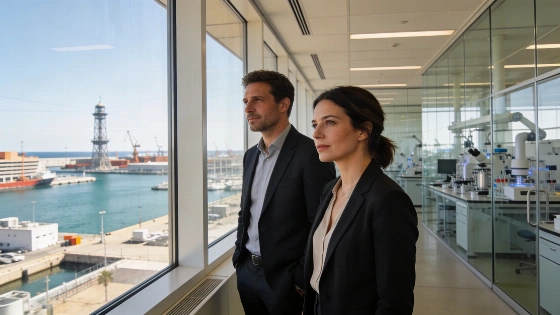
A new office of the i2CAT Digital Research and Innovation Center has opened in Barcelona. The organization has moved to the Pier01 building in the Palau de Mar area to strengthen its role in European scientific initiatives and increase its share in international projects by 50%. The opening was led by Albert Dalmau, advisor on presidency affairs of the Generalitat. After two decades on the UPC campus, the center is integrating into the Tech Barcelona entrepreneurial cluster.
In the coming years, i2CAT will focus on three areas: the development of communication technologies, cybersecurity, and the adoption of artificial intelligence. Two key missions have already been announced in collaboration with the Catalan government: the creation of a digital “shield” for AI-based infrastructure protection and the launch of a plan to ensure the resilience of critical government networks.
The new facility, covering more than 2,000 sq. meters, brings together 15 distributed laboratories, including 6GStarLab—the first low-orbit 6G test center in Europe, supported by a ground station in Móra la Nova (Tarragona). The center's staff includes 250 specialists. Plans call for launching one technological spin-off company annually, as has already been done with Volum Technologies, specializing in 3D holography.
Among the new partnerships is an agreement with the Port of Barcelona to implement drones and 5G networks for port infrastructure management. Funding for the upgrade is secured by a grant of nearly €10 million under the UNICO I+D 6G program of the Ministry of Digital Transformation, with support from NextGenerationEU funds.
Context: In recent years, Catalonia has been actively investing in the development of scientific and medical clusters. For example, the regional authorities have recently lifted restrictions on the construction of new healthcare campuses in Barcelona and Girona, which, according to experts, should accelerate the modernization of infrastructure (more on the Catalan government's decision). Overall, the focus on digital technologies and integration with European programs enables the region to strengthen its position in the field of innovation and attract additional investment.
For reference: i2CAT is one of Spain’s leading research centers in digital technology, closely collaborating with government bodies and businesses. In recent years, the center has been actively involved in European consortia for the development of next-generation networks and digital security.