Barcelona recorded around 100 arrests and 14 looted businesses after unrest around plaza Catalunya. Emergency services received 450 related calls by 22:00. Officials said the housing encampment was unconnected.
Emergency services had logged 450 calls about unrest in basic Barcelona by 22:00, as police restricted access to the area. The overnight tally was around 100 arrests and 14 looted businesses. Catalonia’s interior minister, Núria Parlon, also reported more than 30 fires and said roughly a quarter of those arrested were minors.
Twenty-five of those detained were minors, information from figures reported that night. Earlier provisional reports had put the number at 27, while initial reports during the evening counted around 30 arrests before the total rose to approximately 100. Police advised people to avoid the area and asked tourists to leave the square. Traffic was cut as some entrances to Catalunya metro station closed. FGC shortened Barcelona-Vallès services to Provença on police orders.
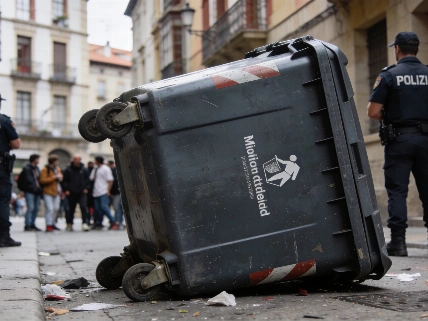
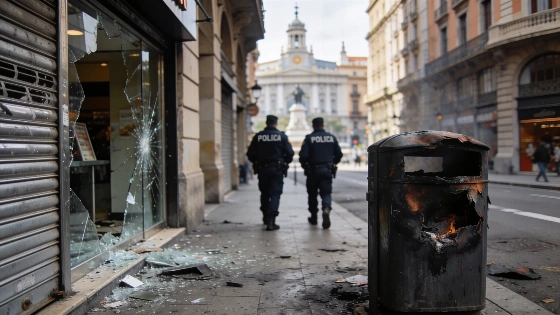
Shopfronts were broken and containers set alight. Reports also described burning barricades. Bus shelters and other street furniture were damaged. Businesses closed early or lowered their shutters; some residents and passers-by tried to protect shops. JD Sports and PcComponentes were among the affected stores. The damage was concentrated around Plaça de Catalunya and nearby basic shopping streets, including the Rambla and Portal de l’Àngel.
The unrest began on Saturday 24 October, when young people gathered near plaza Catalunya after being called together through social media under the slogan «Instituts Indignats». Initial reports put the crowd at an estimated 200 to 300 people at about 17:00; the demonstration had not been formally notified to authorities. The action was inspired by student protests in France and associated with the French “Lyceés Indignés” mobilisation. It escalated into clashes with police, with objects thrown at officers and street fires that damaged urban furniture. The Mossos d’Esquadra and Guardia Urbana intervened as the incidents spread through nearby streets.
Residents of the housing encampment in plaza Catalunya, which had been in place for three weeks, said the violence was separate from their protest. Spokesperson Kiara Monrroy said access had been restricted and barriers put around the camp. Barcelona mayor Jaume Collboni and Catalonia’s interior minister Núria Parlon also rejected any link between the unrest and the encampment or its housing demands.
President Salvador Illa condemned the violence and said those responsible for damage would face consequences. He affirmed that protest is a democratic right, but violence has no place in Catalonia. Collboni called the events vandalism and gratuitous violence. He said the city would join the court proceedings and seek accountability from those involved, including parents or legal guardians where suspects were minors. Parlon said the right to protest could not justify the acts.
The Barcelona events were separate from the anti-fascist action near a Vox rally covered in an earlier report from Maó. In Barcelona, a larger police presence helped bring the unrest under control, and groups dispersed. Officers kept a deployment in place amid the possibility of further protests on Sunday. The live coverage ended at 01:00 on Sunday 25 October, by which point the centre was much quieter and the first vehicles had returned to some streets.