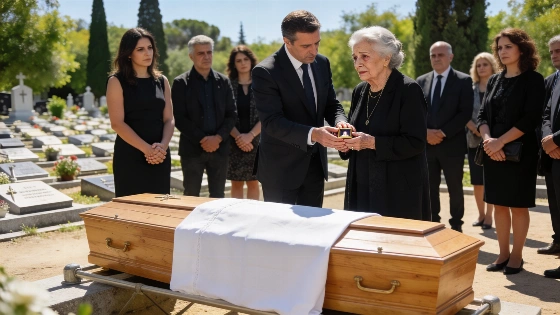
Remains of Franco-Era Victim from Extremadura Reburied in Madrid After 85 Years. The remains of Eusebio Moreno, who died in 1941 at the Orduña penitentiary, have been reburied in Madrid. His identity was confirmed through DNA analysis. Basque Country authorities continue to identify victims.
In Madrid, the remains of Eusebio Moreno, a native of Extremadura who died in 1941 at the Orduña penitentiary (Biscay) during Francoist repression, were reburied. His identity was only established decades later thanks to DNA analysis conducted at the initiative of the Gogora Memorial and with the support of the Basque authorities. The remains were handed over to the victim's daughter, 90-year-old Casimira Moreno, who, for the first time in 85 years, was able to bury her father next to her mother at the Carabanchel Cemetery.
Search and identification
The story of Eusebio Moreno is typical for many victims of the penitentiary system in post-war Spain. In January 1940, he was arrested in Peñalsardo (Badajoz) and transferred to Orduña, where he died a year later. For many years, his family did not know the exact circumstances of his death, while the official cause was listed as 'pneumonia.' Only after the launch of large-scale exhumations and the introduction of DNA identification did relatives receive confirmation of Eusebio's fate. According to his daughter, hope emerged after the authorities began opening mass graves and transferring Franco’s remains from Cuelgamuros.
Scale of the tragedy
According to data from the Gogora Memorial, 201 prisoners died in the Orduña penitentiary between 1939 and 1941, most of whom came from Extremadura, Castilla-La Mancha, and Andalusia. In total, 225 victims were found in Orduña and the adjoining cemetery, including the period when the institution functioned as a concentration camp. Many of those who died were rural workers detained after the end of the civil war and accused of rebellion or other crimes against the regime. Researchers estimate that a significant number of deaths were caused by harsh detention conditions, hunger, and lack of medical care, although official documents frequently listed other causes.
Expert analyses and public response
Investigations and exhumations in Orduña began after local authorities acknowledged responsibility for the use of prison labor and supported the initiative to search for victims. In recent years, three major campaigns to open mass graves have been carried out, leading to the discovery and identification of 93 remains out of 225. In 2023, a DNA matching program was launched, allowing the identities of 30 victims to be established, including Eusebio Moreno. Unidentified remains have been placed in the Orduña Dignity Columbarium.
Solidarity among regions
The Basque Country authorities note that the success of the identification was made possible thanks to cooperation with the administrations of Badajoz and Castilla-La Mancha, as well as the support of the victims' families. According to Alberto Alonso, director of Gogora, the work to restore memory continues, and new agreements with regions allow for further results. The importance of such initiatives is also highlighted in other regions of Spain, where the issues of historical memory and the state's responsibility for the past remain relevant. RUSSPAIN has previously addressed the impact of family tragedies on political and public life, as was the case with the Moreno Bonilla family in Andalusia (more about the family's fate and its impact on the region).