

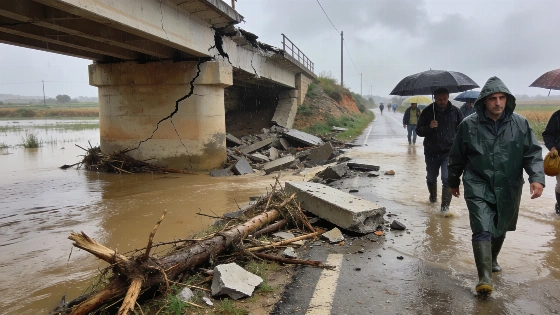
A violent storm brought 186 litres of rain per square metre to Bejís. Flooded homes, damaged bridges, and blocked roads have left the town struggling to restore normal life. Local authorities are assessing the full extent of the destruction.
Bejís, a municipality in Castellón, is working to recover after a torrential storm on Saturday delivered 186 litres of rain per square metre, with 126 litres falling in just one hour. The sudden downpour caused widespread flooding, left several homes with waterlogged basements, and forced authorities to close or restrict access to key bridges and roads due to structural damage and debris.
According to local officials, the storm intensified rapidly, overwhelming drainage systems and leading to significant disruptions. Large hail, described as being the size of walnuts, clogged drains and contributed to the flooding of both private properties and public buildings, including the town hall. One of the main access bridges to Bejís became impassable, while another remains open only with caution. Fallen trees and landslides further complicated travel and emergency response efforts.
The mayor, María José Madrid, described the event as alarming, noting that the intensity of the rainfall initially raised fears of a disaster similar to a DANA (isolated high-level depression). While the situation did not escalate to that level, the damage to infrastructure and property has been considerable. The storm's impact was most severe between 15:00 and 17:30, affecting not only Bejís but also neighbouring towns such as Torás and Teresa.
Emergency crews have been working since Saturday to clear debris, assess structural risks, and restore basic services. Residents are gradually returning to their routines, but many face ongoing challenges due to blocked roads and damaged buildings. The local government is urging caution when using affected routes and is coordinating with regional authorities to expedite repairs.
Severe weather events like this are not isolated in Spain. In recent years, sudden storms and flash floods have caused significant damage in various regions. For example, a recent landslide in León resulted in fatalities and injuries, highlighting the growing risks associated with extreme weather patterns. Such incidents underscore the importance of robust emergency planning and infrastructure resilience, especially in rural and mountainous areas.
Bejís and its neighbours now face the task of rebuilding and reinforcing local infrastructure to better withstand future storms. The municipality's experience serves as a reminder of the unpredictable nature of weather in Spain and the need for ongoing vigilance and preparedness at both local and regional levels.



