Fires and barricades followed the cancellation of Vito Quiles’s planned appearance in Bilbao. The final official tally was 19 arrests and three people under investigation; eight were minors.
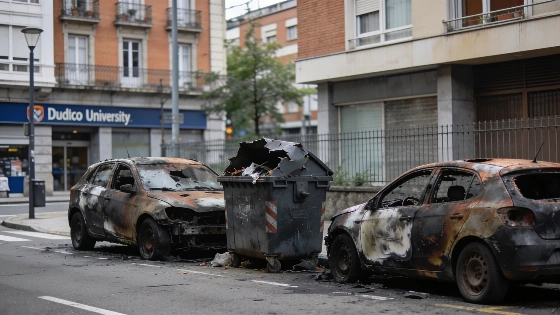
Burned vehicles blocked Avenida Lehendakari Aguirre in Deusto before the Ertzaintza returned to the area. A police motorcycle had been set alight and used as a barricade, while parked cars also burned. Containers were also set alight.
The final official tally was 19 people arrested and three more under investigation over public-order incidents. Eight were minors: seven among those arrested and one among those investigated. Police information cited by Agencia EFE identified three of the arrested people as 18-year-olds and one as a 19-year-old; those under investigation included a 17-year-old and two 22-year-olds. The oldest person was 22.
The unrest followed a day of protests against the planned appearance of Vito Quiles, which never took place. Demonstrations began around midday at Plaza Elíptica, where students gathered for a strike and march toward the Deusto Bridge. The University of Deusto suspended activity at its Bilbao campus from 14:00 and closed it preventively from 15:00 after coordinating with the Ertzaintza. The university said the event was external and that it neither organized nor endorsed it. Quiles cancelled the event in writing at 16:06. He had contacted the Ertzaintza at 14:00 to ask about moving it to another location; the force told him there was no alternative. The appearance had been scheduled for 19:00.
A second antifascist demonstration took place at about 17:00. By about 18:30, small disturbances were beginning. Around 19:15, flames were visible on Avenida Lehendakari Aguirre. The Ertzaintza, whose presence had been reduced, returned at about 19:40. Officers advanced along the avenue and nearby streets, making arrests. Early reports put the number of arrests at nine; the final police tally rose to 19 as operations continued. At 22:00, police were still searching other parts of the city for those involved.
The Basque Security Department said a group that had gathered to oppose Quiles moved towards the Deusto police station throwing stones. It also said the group set fire to a Bilbao municipal police motorcycle. The department argued that the incidents appeared premeditated because Quiles had cancelled his event. Shops were broken into and looted elsewhere in Bilbao, according to official information, and firefighters and cleaning crews were called to deal with the aftermath. Police sources said reinforcements came from other parts of Bizkaia.
Police union Erne criticised the decision to begin dismantling a security operation planned for a known risk. It said cancelling the event did not automatically remove the danger while large gatherings and tension remained. The union also said mobile and public-protection units were too often left reacting without enough advance information.
The day had included two large, peaceful protests. The first began in the morning, organised by Ikasle Antolakunde Sozialista (IAS), a student organisation linked to the self-described Movimiento Socialista de Euskal Herria. Thousands of students were reported to have joined the march from Plaza Elíptica toward the Deusto Bridge. A second antifascist demonstration took place at about 17:00. The later clashes came after Quiles had cancelled his appearance.
Lehendakari Imanol Pradales praised those who had protested peacefully and condemned the violence. Bilbao mayor Juan María Aburto also condemned the unrest and called those involved fascists. EH Bildu’s Bilbao spokesperson, María del Río, rejected the actions and expressed solidarity with affected residents.
Fernando Clavijo, one of the regional presidents at a summit in Bilbao that day, has also pressed Pedro Sánchez over Atlantic migration in an earlier migration appeal.