Fernando Clavijo asked Pedro Sánchez for six urgent steps as arrivals on the Atlantic route rose. His letter cited 3,814 arrivals in the Canary Islands in October, including 2,776 on El Hierro, and asked what extra resources the State had deployed.
Fernando Clavijo’s letter put arrivals in the Canary Islands at 3,814 in October, with 2,776 people reaching El Hierro. The archipelago recorded 46,843 arrivals in 2024. Frontex-related reporting put detections on the Atlantic route at about 7,100 between January and September, 45% below the same period a year earlier. September alone saw about 1,900 detections, four times the August figure. The islands’ president urged Pedro Sánchez to respond to renewed pressure along the Atlantic migration route and asked what additional resources the State had mobilised.
Clavijo proposed six measures, including an extraordinary meeting of the Junta de Seguridad Canarias-Estado and a contingency plan. He argued the response should be ready in advance, with enough capacity to protect people arriving by sea and keep the islands’ public services from carrying a disproportionate burden. The Atlantic route links departure points in West and North Africa, including Mauritania, Senegal, The Gambia, Morocco, Guinea-Bissau and Guinea, with the Canary Islands. Frontex-related reporting attributed an earlier decline in detections to preventive measures in Mauritania, Senegal and The Gambia, adopted in cooperation with Spain and the European Union. Later departures were linked to Morocco and The Gambia.
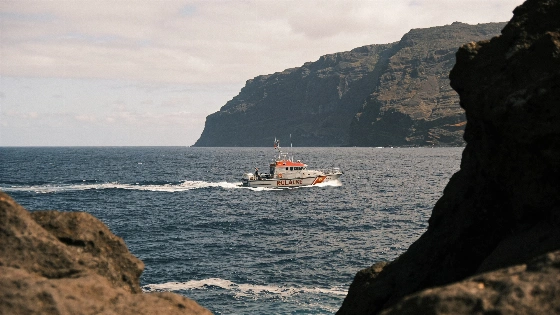
The contingency plan would reinforce Salvamento Marítimo and maritime surveillance and rescue capacity. It would also provide emergency medical care and first-reception facilities, with particular attention to El Hierro, Lanzarote, Fuerteventura and Gran Canaria. In one week in October, 1,414 people reached El Hierro aboard about 20 cayucos. Regional authorities warned that the island hospital risked becoming saturated again. Clavijo called for sufficient funding so humanitarian assistance did not fall disproportionately on Canary Islands resources.
His letter also asked the Spanish government to clarify what extra resources it had deployed before arrivals increased and what remained to be put in place. Clavijo cited earlier warnings from the Canary Islands government, information about intelligence reports from July and public remarks by the Government delegate in the islands. The letter does not establish what resources were deployed. Instead, it asks Madrid to account for them.
Clavijo’s other proposals extend cooperation beyond Spain. He called for diplomatic engagement with Morocco, Mauritania, Senegal and Gambia to improve information-sharing and prevent dangerous crossings. He also urged Spain to seek applicable solidarity measures under the European Pact on Migration and Asylum, alongside increased operational and financial support from the European Union.
The request for European involvement includes a role for Frontex within its remit and a more even distribution of responsibility among EU member states. Clavijo also wants Spain to advocate for the Canary Islands’ inclusion in a future European Emergency Response Framework for the EU’s external borders. The president of the European Commission announced the framework; the letter puts forward the islands’ inclusion as a proposal, not an established decision.
A separate dispute over the State’s role in public policy followed Congress’s rejection of two housing decrees. Unions then called for demonstrations, as an earlier report detailed. Clavijo’s letter addresses migration management and calls for a permanent monitoring mechanism between the Canary Islands and Spanish governments, with weekly technical meetings while the situation persisted. Separate reporting counted 238 unaccompanied minors arriving in the islands in October and 629 people under 18 during the year to that point.