Records from more than 150,000 women in Spain and Norway linked cabergoline use after childbirth to about 70% lower breast cancer risk. Clinical trials must test whether the association holds.
The University of British Columbia reported the findings on October 15, 2026, after researchers examined medical records from more than 150,000 women in Spain and Norway. Women who took cabergoline after childbirth to stop milk production had about 70% lower likelihood of a later breast cancer diagnosis than those who did not. The association was particularly evident among women younger than 50.
The human analysis was retrospective and observational. Participants were not randomly assigned to take cabergoline, so the results do not show that the drug prevents cancer.
A separate pooled analysis involving more than 18,000 breast cancer cases found that relative risk after childbirth peaked at about five years, then gradually declined. Around 24 years after childbirth, it fell below the risk for women who had never given birth.
Cabergoline is a prescription drug used to suppress milk production, including after pregnancy loss or when breastfeeding is not possible. It is not approved to prevent breast cancer. The study appeared in Cancer Discovery and paired epidemiological data with preclinical experiments in mice.
Researchers from Centro de Investigación del Cáncer and IBSAL worked with an international team. The Salamanca centre is linked to CSIC and Universidad de Salamanca through FICUS.
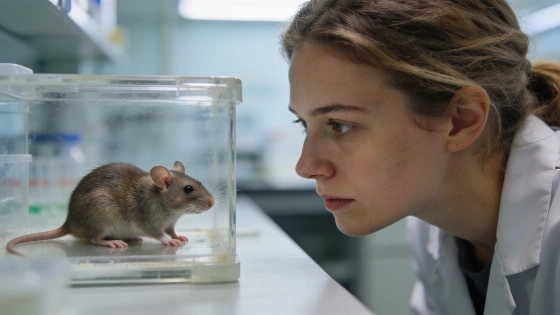
In the mouse experiments, researchers gave a single dose at the end of lactation to animals with BRCA1 and TP53 mutations, which are associated with aggressive forms of breast cancer. About half as many animals developed tumours. Cabergoline also reduced potentially precancerous tissue and the area occupied by milk ducts. Researchers observed less cell growth and more immune cells associated with tumour defence.
The proposed explanation centres on involution, the natural process through which breast tissue changes after breastfeeding ends. In mice with BRCA1 and TP53 mutations, that transition can be incomplete, leaving cells and tissue structures that may later contribute to tumour development. Cabergoline appeared to speed up involution in the experiments, but researchers have not established this mechanism as cancer prevention in women.
Whether the association holds under controlled conditions remains to be tested in prospective trials. Dr. Jesús Pérez-Losada, a CSIC researcher at the Centro de Investigación del Cáncer in Salamanca and a co-director of the study, said any preventive intervention would be considered only after breastfeeding has ended. The research is not intended to change women’s breastfeeding plans.
The team has secured funding from the Gray Foundation for a planned clinical trial involving women with a BRCA1 mutation. Participants will choose how long to breastfeed. After weaning, they will receive cabergoline or a placebo, while researchers monitor biological markers linked to future breast cancer risk. The trial will assess these markers, rather than immediately establish effects on cancer diagnoses or mortality. Clinical effectiveness and an optimal preventive dose remain unknown.
Current preventive options for women at high risk include hormone therapy or surgery, both of which can have significant physical and emotional side effects. The mouse results do not establish that cabergoline could replace either approach. A separate report examined how ultrasound is informing rheumatoid arthritis decisions.
The study also received funding from the Canadian Institutes of Health Research and the Canadian Cancer Society. Additional support came from the Terry Fox Research Institute. Spain’s Ministry of Science, Innovation and Universities provided funding through the Agencia Estatal de Investigación. Funding bodies in the United Kingdom and the United States also contributed, as did the Asociación We can be heroes.