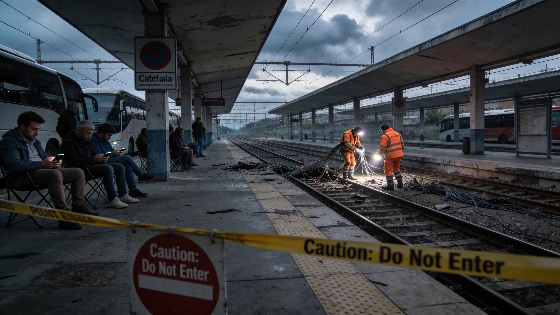
A major cable theft has forced a full suspension of the R3 Rodalies line in Catalonia. Thousands of passengers are affected. The incident adds to ongoing rail disruptions and delays across the region.
Rail travel in Catalonia suffered another major blow this weekend as the entire R3 Rodalies line was brought to a standstill following a cable theft. The incident, confirmed by Adif, forced the immediate suspension of all train services between L’Hospitalet de Llobregat and Puigcerdà, leaving thousands of daily commuters and travelers without rail options. The disruption comes amid a series of ongoing crises affecting the region’s rail infrastructure, with no clear end in sight.
The R3 line, which connects key cities including Barcelona, Granollers, Vic, and Ripoll, has faced repeated interruptions since last autumn. Saturday’s shutdown was initially attributed by Renfe to the consequences of a new cable theft, though later updates from the operator suggested the cause was a broader technical failure impacting the traffic regulation system. Regardless of the precise trigger, Adif deemed train circulation unsafe, prompting a complete halt to services.
As a temporary measure, authorities have deployed replacement bus services between Fabra i Puig (Barcelona) and Puigcerdà (Girona). Passengers traveling between L’Hospitalet de Llobregat and Fabra i Puig are being redirected to the R4 line. The ongoing works and repeated incidents have left the R3 as the most heavily affected Rodalies route, with sections under construction since October and a series of setbacks delaying any return to normal operations.
Elsewhere, the R2 Nord line remains partially closed after a sinkhole appeared during underground works in Moncada. Sílvia Paneque, Catalonia’s Minister of Territory, expressed cautious optimism that train circulation could resume next week, pending safety confirmation from Adif. In the meantime, test runs without passengers are planned before full service is restored.
The R3’s troubles have been compounded by a series of accidents and infrastructure failures. After the fatal Gelida accident in January, Renfe and Adif suspended the entire line to carry out urgent repairs on embankments and tunnels. Attempts to reopen sections have repeatedly failed, with incidents ranging from objects on the tracks to storm damage. The reopening of the Ribes de Freser–Puigcerdà stretch in July lasted less than three hours before a fallen tree damaged the overhead lines.
Delays have also plagued the reopening of the L’Hospitalet–Mollet del Vallès segment, following the collapse of a cement factory wall onto the tracks in March. Legal disputes between Adif and the factory over responsibility have further slowed reconstruction. The latest plan foresees a full reopening of the upgraded line in January 2027, once the double-tracking between Parets and La Garriga is complete.
According to official data, Catalonia accounts for half of all cable thefts in Spain, with each incident causing unpredictable service outages and widespread disruption. The regional government, represented by Sílvia Paneque, has called for tougher penalties for cable theft and related crimes, alongside intensified police action by the Mossos d’Esquadra. The scale of the problem echoes other recent crises in Spain’s infrastructure, such as the mass evacuations during the Madrid wildfires, as reported in coverage of the Madrid wildfire evacuations.
Spain’s rail network, particularly in Catalonia, has faced mounting challenges from both criminal activity and aging infrastructure. Cable theft not only disrupts daily life for thousands but also complicates ongoing modernization efforts. The repeated delays and service suspensions highlight the vulnerability of critical transport links and the urgent need for coordinated action between operators, authorities, and law enforcement. As the region awaits the reopening of key lines, the impact on commuters, local economies, and public confidence in rail travel remains significant.