Cádiz’s archive showcases two and a half centuries of US-Spanish ties. The city hosted one of the first US consulates in Spain. Rare documents and photos trace a unique commercial and diplomatic history.
Cádiz is highlighting its pivotal role in US-Spanish relations with a new exhibition at the Archivo Histórico Provincial. The city, once a major Atlantic trading hub, became the site of one of the first US consulates in Spain in 1790, just years after the United States gained independence. This move reflected the growing importance of Cádiz as a commercial gateway, especially as American ships, sailing under a neutral flag, brought wheat, flour, and rice from ports like Philadelphia and Boston to a Europe embroiled in conflict.
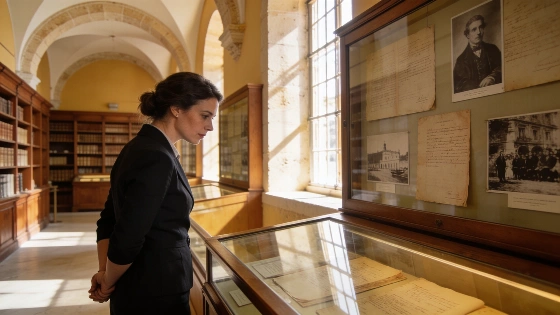
The exhibition, titled “Cádiz: 250 años de relaciones transatlánticas con los Estados Unidos de América,” brings together administrative records, merchant letters, passports, contracts, and photographs. These materials reconstruct a relationship that was far from episodic. The archive’s director, Santiago Saborido, notes that the collection draws from public, notarial, private, and governmental sources, revealing the depth of Cádiz’s transatlantic connections.
Among the earliest documents is the testament of Pedro Menéndez de Avilés, founder of San Agustín in Florida in 1565, showing that ties between Spain and the future US predate the nation itself. However, it was after the US declared independence in 1776 that Cádiz’s role changed dramatically. American ships, no longer under British colors, arrived with the “stars and stripes,” and trade continued despite shifting political landscapes. The US consulate in Cádiz, established to protect American commercial interests, quickly became a key institution, with jurisdiction stretching from the Portuguese border to Gibraltar and Ceuta.
Richard Harrison was the first US consul in Cádiz, but it was José Iznardi, a Spanish merchant from Rota with direct links to Thomas Jefferson, who held the post for decades. The era also saw figures like Richard W. Meade, who arrived from London and became a dominant force in Cádiz’s trade, supplying flour and grain during the Napoleonic siege and nearly monopolizing American shipping consignments. His son, George Gordon Meade, was born in Cádiz and would later command Union forces at Gettysburg during the US Civil War. Richard W. Meade’s fortunes eventually declined after the Spanish administration failed to honor payments, leaving him ruined and imprisoned.
Throughout the 19th and early 20th centuries, Cádiz’s commercial ties with the US deepened. The archive holds hundreds of merchant letters, including 305 from the Gómez firm alone, documenting global trade from the 1830s to the 1960s. Notably, Cádiz shipowners imported American oak for Jerez wine barrels, and later exported these barrels, now seasoned with sherry, back to the US. The city also became an entry point for American vehicles, with Rafael de la Viesca, founder of Radio Cádiz, specializing in their import.
The exhibition features a rare photographic collection donated by Rafael Garófano, including 19th-century American stereoscopic images of giant sequoias and Yosemite landscapes. These visual records, now housed in the Cádiz archive, offer a unique perspective on the enduring transatlantic relationship.
Today, Cádiz’s historical role as a bridge between Spain and the United States is being re-examined through these documents and images. The city’s experience mirrors broader patterns of transatlantic exchange, diplomacy, and migration that have shaped both nations. For context, the importance of international trade routes and their impact on local economies has also been highlighted in recent investigations, such as the Valencia case involving money laundering through port activities.
As Cádiz marks 250 years since the opening of the US consulate, the archive’s exhibition underscores the city’s lasting significance in the history of Spain’s Atlantic connections. The display runs through August, offering a rare look at the documents and stories that defined an era of opportunity, risk, and transformation on both sides of the ocean.
For additional context, Cádiz’s prominence as a trading port was rooted in its strategic Atlantic location, which allowed it to thrive even after losing its formal monopoly on colonial trade. The city’s openness to international commerce made it a natural choice for early US diplomatic presence. The consulate’s activities—ranging from issuing maritime certificates to handling insurance and inheritance matters—reflect the practical needs of a growing American merchant community in Spain. The archival materials now on display not only document economic exchanges but also reveal the personal stories of merchants, diplomats, and families whose lives were shaped by the ebb and flow of transatlantic trade. This legacy continues to inform Cádiz’s identity as a city shaped by centuries of global interaction.